Showing posts with label ARM. Show all posts

Monday, March 2, 2015

Motorola's FreeScale to be acquired by NXP

[Motorola Logo, courtesy Wikipedia]

Abstract:
The Scientific, Education, Engineering, and Server microcomputer markets were once dominated with Motorola based processors. Motorola created the necessary parts for computing platforms, from the power transistors required for switching power supplies, to the plastic coated low-cost semiconductor format which became industry standard, to analog television screens needed for human interaction, to digital HDTV digital screens for modern day human interaction, all the way down to the Central Processor unit with all their additional support chips. Today, we mark the day where America's innovation company, spun-off as Freescale by Motorola, was acquired by a Dutch competitor NXP.

[68000 microprocessor die, courtesy Wikipedia]

History:
A short history of Motorola dating to 2009 can be seen in this PDF. There is not significant concentration on Motorola's contribution to the Computer Industry, so this article completes a short summary of Motorola semiconductor & microprocessor innovations.
1928 - Motorola was started as in Illinois, USA as Galvin Manufacturing Corporation
1947 - Motorola developed their first Television (a requirement for computer monitors)
1949 - Motorola opened up their first Solid State research lab
1955 - The first high powered transistor (core of computer switching power supplies)
1963 - Worlds first rectangular Television (modern computer monitor form factor)
1965 - Developed low cost plastic semiconductor packaging (becomes industry standard)
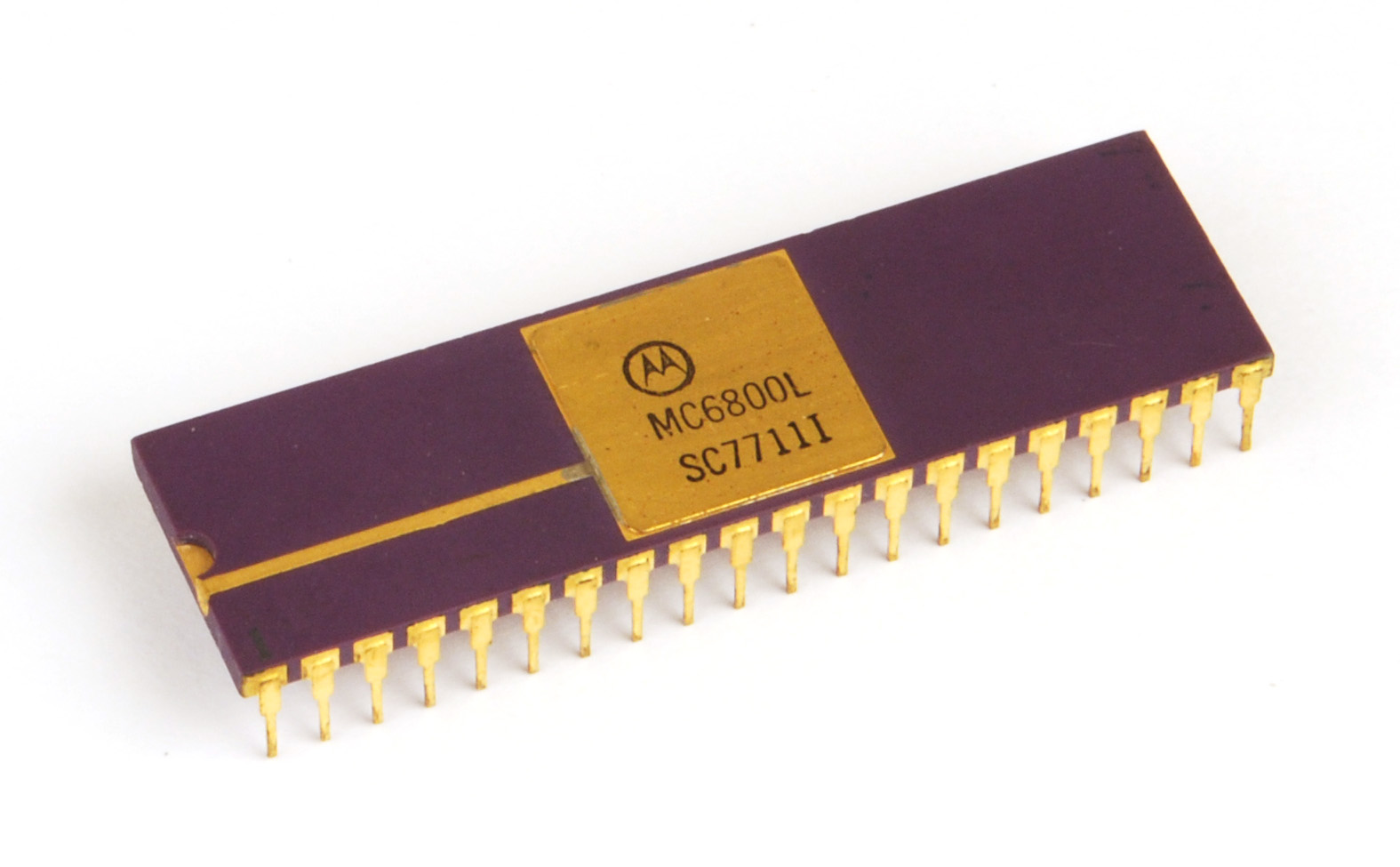
[Motorola 6800 Microprocessor, courtesy Wikipedia]
 1974 - 6800 8-bit Microprocessor developed (for video games, computers, and cars)
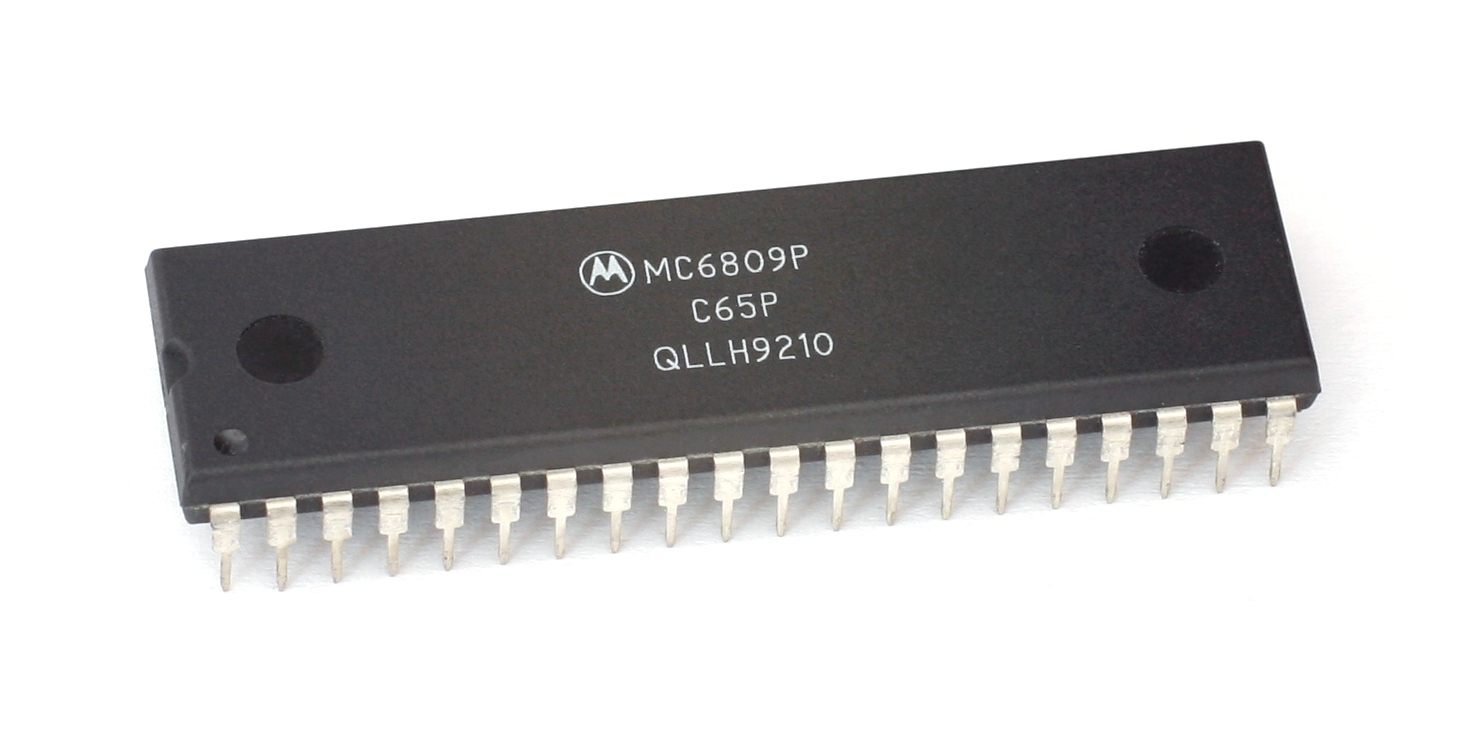
[Motorola 6809, Courtesy Wikipedia]
 1978 - 6809 8/16-bit hybrid Microprocessor released (video games, small computers)
[Motorola 68000, courtesy Wikipedia]

1979 - 68K 68000 16/32 bit hybrid Microprocessor released (used in workstations & servers)
1982 - 68K 68008 8/16/32 bit hybrid Microprocessor supporting inexpensive 8 bit support chips
1982 - 68K 68010 16/32 but hybrid Microprocessor supporting Virtual Memory
1984 - 68K 68020 true 32-bit Microprocessor released (for desktop workstations)
1987 - 68K 68030 released, integrating Memory Management unit (lower cost workstations)
1988 - 88K 88000 released, Motorola's first 32-bit RISC architecture announced
[Motorola 88100 Processor, courtesy Wikipedia]
1988 - 88K 88100 released, 32-bit RISC implementation (1-4 socket shared MMU servers)
1989 - 68K 68040 released, integrating Floating Point processor (faster workstations)
1990 - Motorola acquired General Instrument Corporation (proposed digital HDTV)
[Motorola 88110 Processor, courtesy Wikipedia]
1991 - 88K 88110 announced, 2nd generation 32-bit RISC processor (integrated MMU)
1991 - PowerPC architecture released, a partnership between Apple, IBM, and Motorola
1992 - 88K 88110 first & last processors shipped (succeeded by PowerPC)
1992 - PowerPC 601 32-bit IBM CPU, PowerPC core, on Motorola 88110 bus
[Motorola PowerPC 603, courtesy Wikipedia]
1994 - PowerPC 603 32 bit 2nd generation microprocessor released
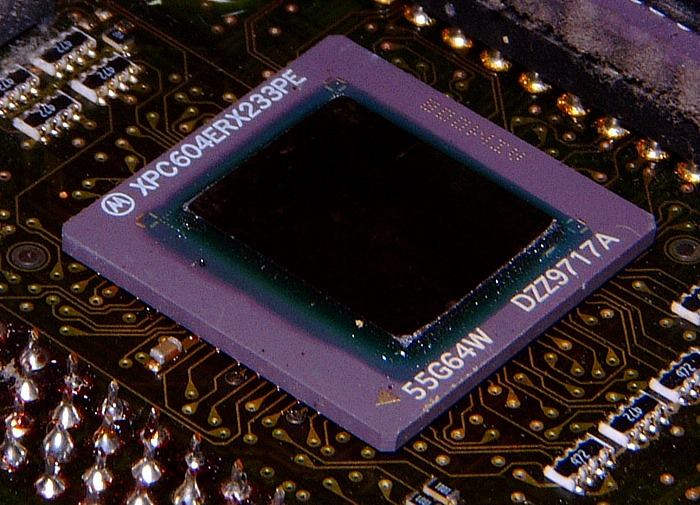
1994 - PowerPC 604 32 bit 2nd generation microprocessor released
[68060 Microprocessor, courtesy Wikipedia]

1994 - 68K 68060 last 68K compatible processor, instructions optimized in hardware
1994 - 68K ColdFire microprocessor family released, with a simplified 68K core
1995 - 68K DragonBall microprocessor family from Hong Kong, a 68K micro-controller
[Motorola PowerPC 604e, courtesy Wikipedia]
1996 - PowerPC 604e 32 bit 2nd generation microprocessor released
1997 - PowerPC 620 64 bit 2nd generation microprocessor released
1997 - PowerPC 7xx 32 bit 3rd generation microprocessor released
2001 - i.MX microprocessor family released, abandoning 68K core for ARM core
[Freescale Semiconductor logo, courtesy Wikipedia]
2004 - Motorola spins-off Microprocessor division as Freescale Semiconductor
2010 - Kinetis microprocessor family released by Freescale, based upon ARM core
2013 - Kinetis microprocessor developed the worlds smallest processor
2015 - Motorola Semiconductor, which became Freescale, is acquired by Dutch NXP

[NXP Semiconductor logo, courtesy Wikipedia]

Conclusion:
The United States was the originator of massive computer industry change over the decades. Motorola was one of the first major computing vendors. Motorola divested their Semiconductor division to Freescale. Freescale largely dis-invested itself from the award-winning Motorola's 68K architectures in favor of British owned ARM RISC architecture. Now, Freescale is gone.

Wednesday, December 25, 2013

Processor War: Google to Manufacture ARM?


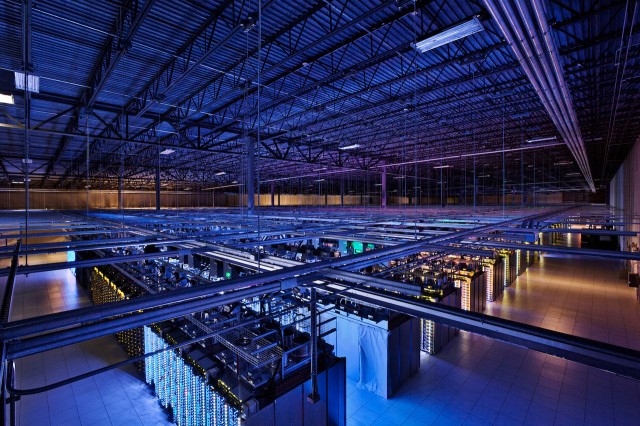
[Datacenter Image, courtsy ARS Technica]
 Google maybe thinking about making their own ARM central processing units
http://arstechnica.com/information-technology/2013/12/report-google-contemplates-homemade-arm-chips-to-power-its-servers/
We've already seen consumer technology companies like Apple and Samsung become more vertically integrated in the last few years—Apple designs its own phones and tablets, the chips that go in them, and the architecture that goes into the chips, for example. Just as Apple's software benefits from tight integration with Apple's hardware, Google is reportedly eyeing chip design as a way to "better manage the interactions between hardware and software."

[Sun Microsystems Logo]
Of course, Sun (and now Oracle), have seen a similar benefit with SPARC, over the years. Sun Microsystems was able to drive volume in their market, but as manufacturing costs rose, the market needed to grow accordingly. The UNIX market had found ways to differentiate themselves from the consumer market, but that market shrank as the consumer market canibalized it. There needs to be a large enough market to make the investment profitable in this high-cost and high-risk arena.


[Sun Ray Terminal]
Google is large enough, to make such an investment profitable, and they have a large enough investment in ARM hardware software with the Mobile consumer market. This does not guarantee survival, however, as Oracle demonstrated their desire to exit the desktop appliance market with the discontinuing of their Sun Ray product, when they could have invested in SPARC or ARM for the Sun Ray to make an additional consumer for their SPARC processor investment, hedge the investment in SPARC processor in skilled programmers, and created a new market driver for Oracle's Cloud offering using Sun Ray appliances.

Friday, December 20, 2013

ARM: Calxeda Runs Out of Money

[Calxeda ARM processor, courtesy ComputerWorld]
The developer of 64 bit ARM processors closed down, the week before Christmas. Calxeda is going through restructuring. The world may still see a 64 bit ARM from this company, yet. Previously, their 32 bit ARM processors were well received by the market. In 2011, Calxeda announced the development of a 480 core low power server, to be consumed by Hewlett Packard. The "Moonshot" servers from HP may be negatively impacted - HP's attempt at resuming RISC processor platform production may be in chaos.

Monday, November 12, 2012

ARM, Itanium, x64, and SPARC Processor Wars Update

Courtesy, The Register

Apple iPad 4 Wi-Fi only tablet review

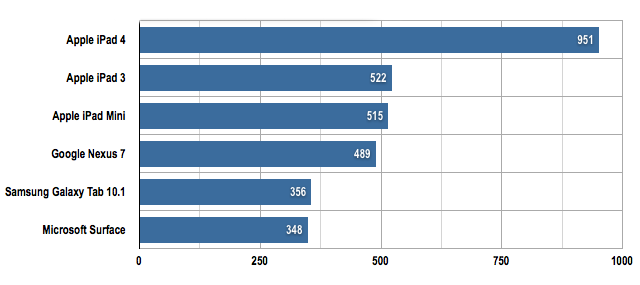
Beyond the screen, the iPad 4 delivers considerably more oomph than its predecessors. The Geekbench testing app showed that the iPad 3’s performance was much the same as the iPad 2’s, but the new model scores considerably higher: 1766 to the iPad 2’s score of 763. That’s in part because the chip is better, but also due to a 40 per cent increase in CPU clock speed.

Despite that, there’s no degradation in battery life - up to ten hours, says Apple, and I concur. If that’s due to a bigger power cell inside


Courtesy, International Business Times

Apple Rumored to Abandon Intel for Its Own Chip

Intel has not been able to ignore rumors that Apple is considering switching some of its Mac's Intel processors to its own A-series of mobile chips, saying it would be a remiss to be dismissive of the rumors.

According to Apple Insider, the claims came on Friday from the Japanese site Macotakara, who successfully predicted the release of the iPad 2 in March, saying that new thunderbolt-equipped MacBook Airs powered by an A5 processor were being tested.


iPhone maker Foxconn hatching US factory expansion plan?

Foxconn, the... manufacturer of kit for Apple, Amazon, Sony, Nintendo, and others, is exploring the possibility of building plants in the US – Detroit and Los Angeles, to be specific.

Those aforementioned market watchers, however, say not to expect your next iPhone or iPad to be made in America – Apple products are too complex to be built by mere 'Mercans.

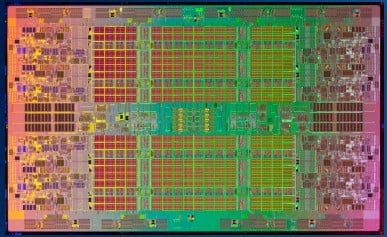
Intel Itanium 9500 die image, courtesy The Register

Intel to slip future Xeon E7s, Itaniums into common socket

The installed bases of HP-UX, NonStop, and OpenVMS users can breathe a sigh of relief if they were hitting a performance ceiling, and so can other server makers such as Bull, NEC, and Fujitsu that have proprietary operating systems that also run on Itanium iron.

The bigger sigh of relief is that Intel is converging the Xeon and Itanium processor and system designs such that future Xeon E7 chips and "Kittson" Itanium processors will share common elements – and, more importantly, share common sockets.

This is something that Intel has been promising for years, and something that HP – the dominant seller of Itanium-based systems – has been craving, as evidenced by its Project Kinetic. Convergence was the plan of record for HP in June 2010 – nine months ahead of the Oracle claim that Itanium was going the way of all flesh – and HP wanted to converge its ProLiant and Integrity server platforms, which used x86 and Itanium processors, respectively. A common socket helps that effort in a big way

Courtesy: HWSW

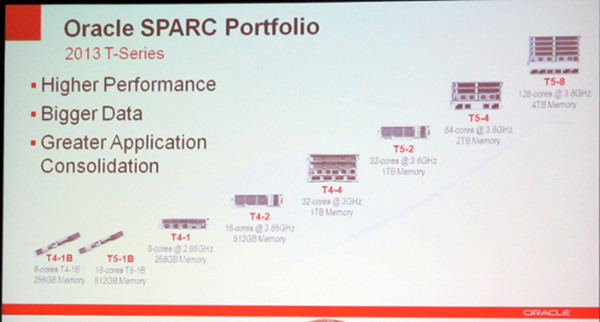
Oracle: two new SPARC chips next year, and three more under construction

In the first half of 2013, the SPARC T5. Heydar performance during the first SPARC-based systems affected T5 chip - the processor itself to Oracle in August Hot Chips conference, explained in further detail when I got to know of it is based on the company's servers are under testing labs. The insert describing the HWSW you guessed, the T4-based machines favorable market acceptance due to either the end of 2013 can expect the T5 launch of Oracle, Heydar, however, clearly stated: the T5-based machines in 2013 in the first half appear commercially.

S3 is a statement of up to 8 processor cores capable of running parallel threads, manufacturing technology development, however, due to the T5-8 instead of 16 cores is the L3 cache size is doubled to 8 megabytes increased. The memory controller also doubled the number of Oracle, we have four instead of two found in the T5, which are standard DDR3-1066 memory modules continue to be handled. Even the T4 was part of two on-board PCI Express x8 controller from its predecessor, however, was supported only in version 2.0, but the new processor PCI Express Gen3 standard used by Oracle, which is twice the bandwidth, in addition to both separate data management unit was.

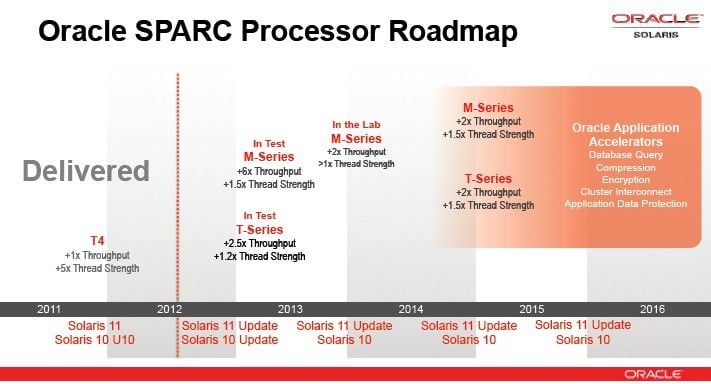
Oracle SPARC Roadmap October 2012, courtesy The Register

Oracle's mighty SPARC plug fries Fujitsu, bigs up new SPARC M4 processor

Oracle, to its credit, has been perfectly blunt about its long-term Sparc server roadmap: it very clearly outlined its goals with rough timelines. That is more than rivals IBM, Intel and Hewlett-Packard do with their high-end system roadmaps, which can be found if you mooch around the internet long enough for someone to accidentally posts something interesting.

And in the M4 presentation, which Oracle refused to share even though it knew the data was out there, we see that the new chip is a beefy version of a Sparc T series chip: it sports six S3 cores that debuted with the eight-core Sparc T4 processors and are used, in a modified form, in the forthcoming Sparc T5 chips. Those cores will share a 48MB L3 cache, a lot more than the 8MB of shared L3 cache used in the 16-core Sparc T5 processors. Presumably the S3 cores used in the M4 have the same 16KB L1 instruction and 16KB L1 data caches, and 128KB of L2 cache, that each S3 core has on the Sparc T4 and T5 processors.


Fujitsu to embiggen iron bigtime with Sparc64-X

with the Sparc64-X processors, which will converge the vanilla and fx versions of the Sparc64 chips into a single products, explained Takumi Maruyama, who is in charge of processor development within Fujitsu's Enterprise Server business unit.

The core has been modified to support the HPC-ACE instructions that accelerated parallel processing and also now includes special accelerators for encryption and other functions – a feature that Fujitsu calls "software on a chip" and akin to the accelerators that Intel, IBM, and Oracle have put into their high-end processors to boost encryption, hashing, and other algorithms.

The Sparc64-X also, thankfully, supports hardware-assisted virtualization, something that has been sorely missing from the Sparc64 series... The chip supports the Sparc V9 instruction set and the extensions to it that Fujitsu has created...

The Sparc64-X core has a deeper pipeline, which enables a higher clock frequency on the processor compared to the Sparc64-VII+, a better branch prediction scheme, bigger queues and floating point registers, more aggressive out-of-order execution, a two-port, multi-banked L1 cache (with twice the bus size and more L1 cache throughput), and a richer set of execution units.

There are two integer execution units, another two virtual address adders that can do double duty as execution units, and four floating point units that can do math and graphics functions. This is twice the number of the integer and floating point units that the Sparc64-VII+ chip had.


Network Management Implications:

Oracle seemed to be correct about Itanium proverbially "going the way of the dinosaur." The common socket seems to be the next move in migration from Intel 64 bit Itanium to the AMD created and Intel copied x64 architecture.

The expression from some analysts that SPARC's life expectancy was limited was certainly pre-mature, appearing to be set to out-live Intel Itanium, and forcing Intel to keep it's x86 line alive much longer than they ever intended. The move by AMD to move the Intel x86 architecture to 64 bits, with the successful seamless migration of SPARC from 32 bit to 64 bit processing were key drivers in forcing Intel to rethink the sunset of x86.

With Apple releasing ARM tablets, fully two to three times faster than competing tablets, one might wonder how long it will be until Apple starts releasing laptops, desksides, desktops, and servers based upon it's own ARM engineering and discard Intel x64? With rumors of MacBook Air's based upon Apple's ARM chipset, this could be a very interesting question. More software seems to be appearing under MacOSX ARM based iOS deviation, rather Intel based MacOSX .

SPARC seems to be proverbially "on the march" with 2 original SPARC vendors (Sun, now owned by Oracle, and Fujitsu) continuing to develop SPARC processors into the distant future, each showing innovation as well as "keeping up with the times" with virtualization.

For businesses continuing to look for a stable environment to build platforms which scale, for long-term network management investments, SPARC continues to be a reasonable investment for long term deployments. Multi-platform and multi-vendor network management seems to be "in the cards" for a long time, if people decide to build to standards, and if vendors decide it is in their best interest to support standards.

Wednesday, July 11, 2012

Architecture Update: The ARMs Race


Abstract:
With the explosion of ARM processors in embedded systems, ranging from phones to tablets, ARM designers are creating ever more complex processors, CPU manufacturers are creating more options for system designers, and even system designers are discussing the movement of ARM from embedded to server and desktop systems.
CPU Architecture

64 Bit ARM v8
First, let's discuss the CPU architecture updates to the ARM processing architecture. Traditionally, the ARM processor bundled a 32 bit processor. While this was more than adequate for embedded systems, this limited the application of the architecture into other spheres of computing.


At the ARM TechCon conference in Santa Clara, California, in October 2011 - the ARM v8 64 bit architecture was announced, demonstrating 64 bit extensions similar to what was done with SPARC, AMD, and later Intel CPU's.

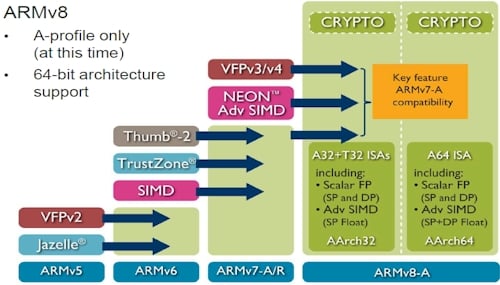
The new ARMv8 architecture has two execution states, the AArch32 state that is compatible with prior generations of 32-bit ARM processors, and AArch64, the new 64-bit extensions. At the moment, the ARMv8 architecture has only been profiled for what ARM calls the A line of its Cortex reference designs, which means they are designated for application processing such as that done on smartphones and tablets.
The ARMv8 architecture will bring forward TrustZone virtualization (which debuted with the ARM v6) and NEON SIMD instructions, which debuted with the ARM v7 designs. The interesting thing about the ARMv8 is that it will offer both double-precision floating point math through that NEON unit.
ARM Update: Mali 450 GPU moves from 4 to 8 cores

The Registered published a short article about an ARM roadmap split:
ARM is doubling the punch of its Mali 400 graphics processors with extra cores for tablet, phone and TV makers that are not ready for combined graphics and compute chips.
The microprocessor architect has announced the Mali 450 GPU, featuring eight cores instead of four.
ARM said the 450 showed it remains committed to the 400 range, and said it is now splitting its roadmap.

ARM Designs Quad-Core 32-bit v7
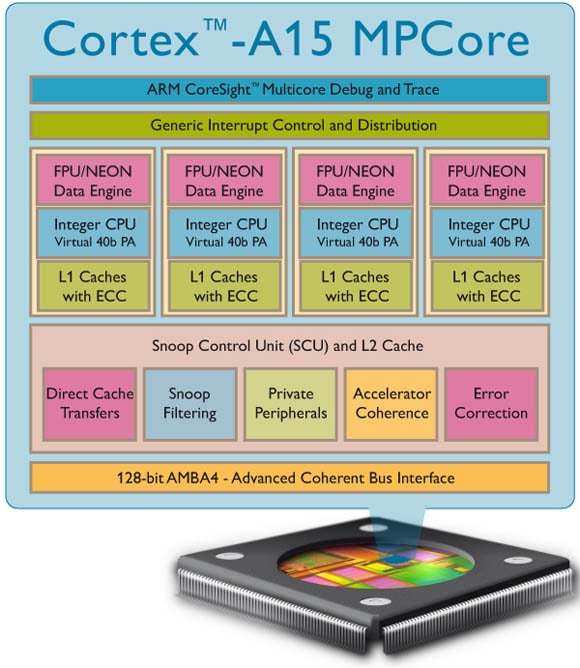
In April of 2011, ARM announced their quad-core Cortex-A15 processor was scheduled to appear in smart phones or tablets in 2012-2013.
ARM's Cortex-A15, however, will up the ante with an out-of-order superscalar pipeline, 40-bit memory-addressing capabilities, floating-point and media-handling improvements, and a clock speed of up to 2.5GHz, all at power requirements said to be comparable to the company's current Cortex-A9 design.
The Cortex-A9 is the design upon which such top-end smartphone and tablet chips as Apple's A5, Nvidia's Tegra 2, and Samsung's Exynos 4210 are based. The Cortex-A15 design, meanwhile, has already been licensed by Texas Instruments and Nvidia, and Nvidia

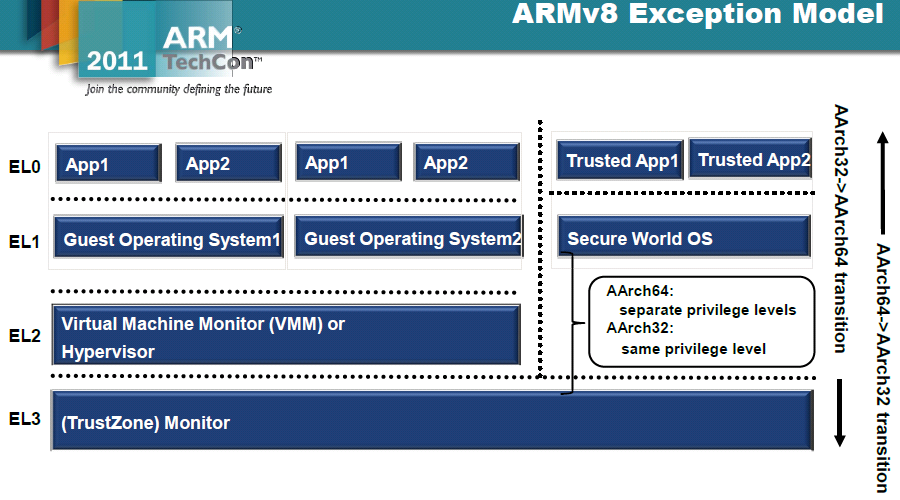
(ARM v8 Exception Model, courtesy ARMv8 Architecture PDF)
ARM Starts Designing 64-bit
Richard Grisenthwaite, Lead Architect at ARM, provided a technology preview of the ARMv8 64 bit architecture at ARM TechCon in 2011. It was clear from the document that 32 bit ARM processors would continue to be designed and that this was merely a new line of processor design which manufacturers could leverage.

System Designers


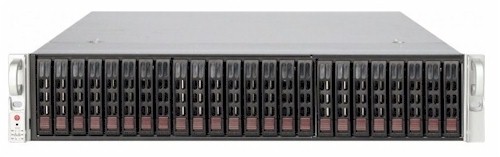
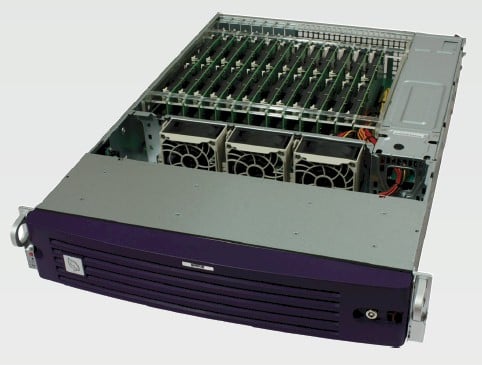
(A Boston Viridis server, front view, no cover, courtesy, The Register)

(Boston Limited's first Viridis server, courtsy The Register)


Boston
The Register writes about U.K. IT Supplier Boston is releasing their Viridis platform, based upon their Calexeda partnership, using the Smoothstone ARM processor.
"The Viridis server is using the 1.4GHz variant of the ECX-1000 processors and plunks a 4GB DDR3 memory stick in for each node on the card. The card has two 10GE network ports and four SATA disk ports per processor... The dozen processor cards including memory burn only 300 watts."


(Dell Quad ARM Server Chassis)

(Dell Quad ARM Server Blade)

Dell
It was mentioned during the June 2012 Network Management "System Vendor: CISC, RISC, EPIC Update"  that Dell was breaking into the ARM marketplace. Each Dell blade holds 4 32-bit ARM servers. Ironically, Dell's blade server looks a lot like a far less rugged old Sun Fire B1600 blade chassis, which contained 3U high SPARC RISC SPARC blades, but each Sun blade, from a decade ago, only held single 64 bit server.

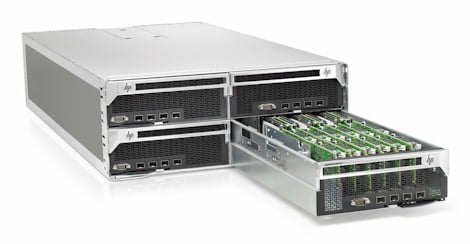
(HP Redstone ARM v7 32 bit Server, courtesy The Register)
 HP Enters the ARMs Race
In November 2011, HP released ARM RISC servers to supplement their Proliant CISC servers and Itanium LWIS processors. This was the result of "Project Moonshot".
"To make the Redstone, HP took a half-width, single-height ProLiant tray server and ripped out just about everything but the tray. In goes the passive backplane that the Calxeda EnergyCard, and HP can cram three rows of these ARM boards, with six per row, for a total of 72 server nodes, in a half-width 2U slot... That gives you 288 server nodes in a 4U rack space, or 72 servers per rack unit."
ARM CPU Manufacturers

Samsung
DRAM manufacturer, and more recently cell phone manufacturer, appears to be hiring CPU designers, possibly for the ARM CPU chips, used in Apple and their own cell phones. Various chip designers are being harvested with experience ranging from Sun Microsystems and Oracle to AMD.


Calxeda
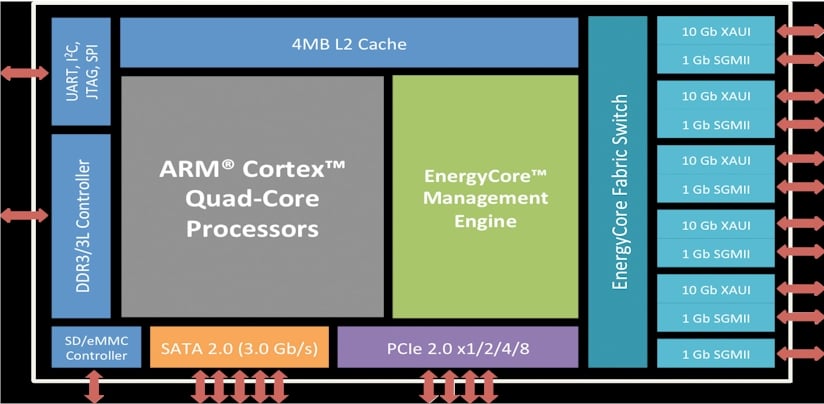
November 2011 - Calxeda announced their 32 bit quad-core EnergyCore ARM v7 EnergyCore ECX-1000 Series CPU's.
"Calxeda has spent the past several years tweaking the 32-bit ARMv7 core to come up with its own system-on-chip (SoC) and related interconnect fabric suitable for hyperscale parallel and distributed computing where nodes have only modest memory needs."

[Applied Micro CEP Paramesh Gopi, courtesty The Register]
Applied Micro
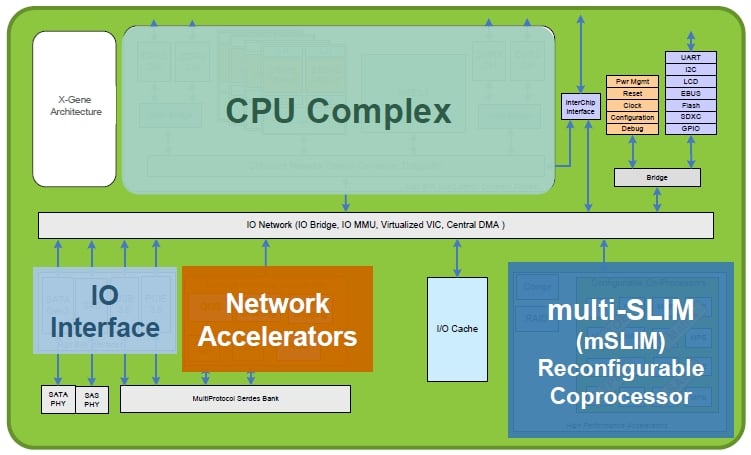
Also in October of 2011, Applied Micro announced their X-Gene 64 bit ARM v8 processors.

(X-Gene ARMv8 CPU)
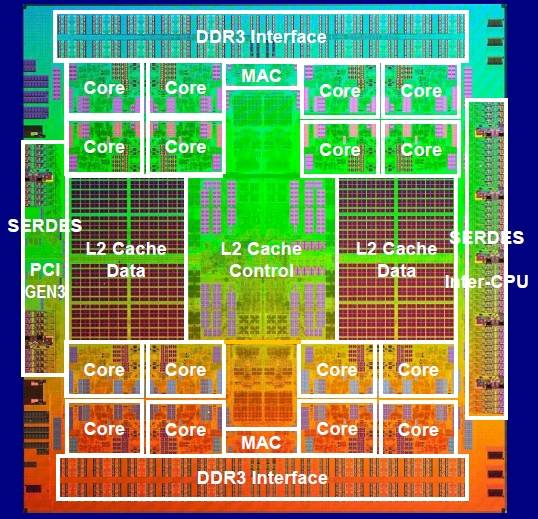
"The X-Gene chip will also include DDR3 main memory controllers, two 10 Gigabit Ethernet ports, SATA storage and PCI-Express peripheral controllers, and a power/management module – all on the same die as the cores."
"The cores will have L1 and L2 caches per core, a shared L3 cache that spans the cores, and have a target clock speed of 3GHz."
"The X-Gene chip also has on-chip CPU and I/O virtualization, just like x86, Sparc, Power, and Itanium chips do. The architecture also allows for various kinds of offload engines to be plugged in and perhaps integrated on the chip package."


(X-Gene ARM v8 Block Diagram, courtesy The Register)
The X-Gene is suposed to be ready to ship second half of 2012 - which is right about now. Taiwan Semiconductor Manufacturing Corporation (TSMC) is first etching the chips using a 40nm process, with subsequent designes in 28nm.


Nvidia
At the Las Vegas Consumer Electronics Show in April 2011, video chip processing giant Nvidea discussed phones based upon their Tegra 2 dual-core ARM Cortex-A9 chips, which bundle graphics processing, licensed the future Cortex-A15 design, and announced "Project Denver" circa 2013 - targeting desktops.
"Denver provides a choice. System builders can now choose a high-performance processor based on a RISC instruction set with modern features such as fixed-width instructions, predication, and a large general register file. These features enable advanced compiler techniques and simplify implementation, ultimately leading to higher performance and a more energy-efficient processor."
Back in September of 2010, Nvidea president and CEP Jen-Hsun Huang also discussed their "Kepler" ARM processor, due in 2011, and the "Maxwell" ARM processor due in 2013.
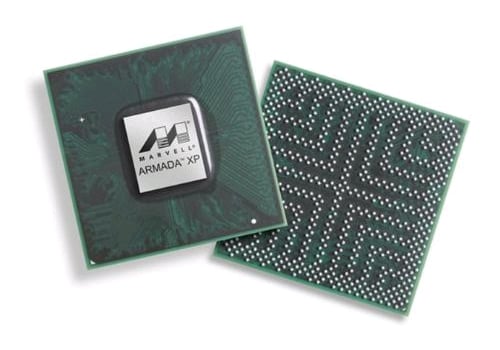
(Armada XP Processor, courtesy The Register)
Marvell

Chip manufacturer Marvell acquired the ARM RISC CPU business from Xscale in 2006. In 2010, Marvell announced it's quad-core 32 bit ARM v7 Armada XP processor, implemented on a 40nm process.
"...running at 1.6 GHz with a shared 2 MB L2 cache memory... The chip will include variants that support 64-bit DDR2, DDR3, and DDR3 low-voltage memory chips. For on-chip DDR3 controllers, the memory can run at to 800 MHz and ... has ECC memory scrubbing."
"The chip includes four PCI-Express 2.0 x4 interfaces and four Gigabit Ethernet controllers etched into its silicon; it has 16 SERDES lanes for implementing USB, PCI-Express, SATA, SGMII, and QSGMII ports..."
 It seems 2013 could prove very interesting from Marvell.
Conclusions
It is very odd, not to see IBM producing any platforms based upon ARM, but very interesting to see IBM assisting ARM to reduce it's chip process down to 14nm, back in January of 2011. One has to wonder, at what point will IBM stop developing POWER (POWER 7+ is now about 10 months late?) or stop helping ARM produce smaller & faster processors. Up until this point, POWER was not in competition with ARM, but clearly ARM is climbing the food chain, moving to thin client desktops, cell phones, tablets, and now servers.

Apple Mac OSX, based upon BSD UNIX, and Google's Android Linux are the main OS players in the ARM arena - with Microsoft starting to produce Windows ports.

OpenSolaris port to ARM was of interest back in 2009, a code contribution made in 2009, additional work in Feb/Mar 2012 timeframe with some code, Illumos developers considering ARM in March 2012, Google "Summer of Code" ARM project idea suggested in April 2012, a grad student showing interest in April 2012, and with all the activity around ARM servers - one might hope that there will be additoinal interest in the Illumos community.

Will other OS vendors port to ARM?

Sunday, July 1, 2012

Detecting the Sun in The Solar System

Detecting the the Sun in the Solar System

Abstract:
A question was asked by writer Chris Mellor, after a opinion article in The Register: "What should Oracle do with Sun?" To understand what should be done with Sun, one must understand what Sun's role was in the computing ecosystem, observe the effect of competition, and understand gaps in the market.
Sun's Solar System: Sun Microsystems played in many different overlapping markets sets.

[Image: Sun SPARCStation 1 - courtesy financeportal, The History of the Famous SPARCStation]

Desktop Market
  • Sun commercialized graphical workstations market (may not have created it, but really drove the market) with bundled software applications.
  • Workstations were later killed as Microsoft leveraged it's graphical windows interface to kill off other desktop product offerings, assembling a high-cost portfolio of applications (whose cost were not much different from UNIX workstations) - except UNIX desktops never had an front-office suite.
  • The movement to Ultra-Thin Clients from Sun was an attempt to hold the desktop market, being able to create a new platform, capable of running proprietary Windows applications, as well as Open Standards and Open Sourced applications.
  • Sun's purchase of open-source integrated Office type application and creation of OpenOffice was the attempt to place a foot-hold back in the desktop market (again) - recognizing that Microsoft Office effectively made UNIX workstations irrelevant and Microsoft used the MS Office integrate to drive Microsoft Windows-only based Back Office products to push Solaris out of data centers.
Carrier Server Market
  • Telephone carriers like AT&T used to manufacture their own [Western Electric] 32 bit CPU's for their SVR4 based 3B2 computing systems and use those systems for internal processing.
  • Sun helped to create The Internet, bundling the features that telephone company providers desired, such as SVR4 symmetric multi-processing and standards based interfaces.
  • Desktop Sun Workstations were stacked in racks to make the first clusters, they were re-packaged into rack units. Soon, 32 bit proprietary desktop platforms were re-cased and stacked in racks, and started serving telephone company and internet loads, which were Sun's domain.
  • Pressure was placed on Sun by bundles of open sourced products, as software developers created software on standard-less operating systems (i.e. Linux) on top of proprietary firmware and hardware platforms (which became viable as 16 bit desktop processors gave way to 32 bit processors.)
  • As desktops achieved 64 bit processing, and Windows pushed Sun out of the desktop market, Sun's acquisition SPARC licensee Afara Websystems, and open-sourcing their first processor (for any vendor to share) attempted to push back into web serving loads (where one open-sourced T1 CPU could out-serve as many as 4 or more other proprietary processors.)
  • The use of high-throughput and power conserving carrier-class servers continue to be pumped out of Sun, and later Oracle, in the form of T2, T2+, T3, and finally with the T4 SPARC processors, which were compatible with AT&T SVR4 Solaris.
Enterprise Market
  • The desktop workstation market saw bundled windowing systems, bundled open systems TCP/IP networking, bundled instant messaging (talk), bundled email (SMTP), bundled simple standard text processing (vi, textedit, dtedit, etc.), bundled standard print processing (lp, lpr), added open source simple news group collaboration (NNTP), added open source web server software (Apache), and unlimited user communities - at a reasonable per-unit cost.
  • Companies like Novell and Microsoft released proprietary networking stacks, proprietary operating systems, proprietary desktop environments, per-user licensing fees, costed email clients, with costed email server software, costed print server costs, per machine software charge, etc. Businesses found themselves more likely to build a proprietary software stack of what was available in the market, leveraging UNIX on the back-ends (client-server days.)
  • As desktop providers, like Microsoft, used their operating system as a way to take over the desktop application market, soon it was determined that they could take over the server application market. They released free crippled proprietary desktop products, Server applications, once released upon UNIX (mail servers), would only be available on Windows servers with proprietary protocols. Collaboration tools like News Groups.
  • Java was the "olive branch" offered to the UNIX community, to provide a common software platform, recognizing that proprietary Microsoft Windows effectively made UNIX standards irrelevant and provided an ecosystem for competition with Linux.
Processor Market
  • Sun and other UNIX vendors standardized on real 32 bit platforms with flat memory models, as PC's continued to play with 8 and 16 bit processors.
  • As the proprietary OS desktop wars raged, with proprietary 16 bit processors becoming proprietary 32 bit, Sun and other workstation vendors needed to find a new magic bullet. An Open SPARC consortium was founded, where multiple vendors could cooperate & compete, by implementing their own processors, which complied to a single compatible specification.
  • The inability to bring several open SPARC CPU designs to market placed Sun on the tail-end of general-purpose computing systems for a number of years. This contributed to their demise, and consumption by Oracle
  • Proprietary CPU vendors canceled lines of processors and emulated the radical movement by SPARC, coring-out & threading out, bring their designs to parity in throughput.
  • Sun/Oracle gained time to build a new core, ultimately realized in the SPARC T4, and consolidating more functionality (soon to be realized in the SPARC T5.)


Database Market
The fortunes of Sun Microsystems was increasingly dependent upon Oracle. Oracle had their hand in the decline of Sun Microsystems, by over-milking the cow, and making their platform uncompetitive in the enterprise. For the same performance, Oracle charged a premium under SPARC Solaris, and thus drove the enterprise market off of Solaris.

Sun had engaged into partnerships with Postgres, bundling the product into their Solaris Operating System support, for various ISV's (through which more hardware could be sold.) Sun had also purchased MySQL, to also become a primary ISV vendor support channel (through which more hardware could be sold.) These movements were not necessarily enough, to sway the tide.

Oracle, unfortunately, had their fortunes tied to Sun Microsystem, so Oracle had to buy Sun out, in order to basically survive. The end of Postres support occurred, but Oracle invested more resources in making their database run faster under SPARC Solaris than under any other platform.


Oracle's Education on Sun's History
Interestingly, the new owner, Oracle, can see from the history, that people are more interested in cost than they are in Open or Open Source. If they cared about Open, proprietary desktop applications, proprietary Microsoft Windows, proprietary bios/firmware, and proprietary Intel CPU Architecture would never have eaten Sun's (or other vendors') Open Lunch.

A movement to break into the standard-less Open Source arena was attempted with the creation of OpenSolaris. The new driver was mid-range storage at a terrific price-point. OpenSolaris created new competitors at the low end, in the storage areana, which Oracle did not want to have to wrestle with, so they re-closed Solaris with 11. OpenSolaris did expand Solaris mind share into Open Source arenas.

It is pretty clear what Oracle will do with Sun - Oracle will go proprietary with Sun, to compete with the other proprietary vendors, who ate their Sun's lunch. The market prefers cheap & standardless on proprietary or proprietary on cheap proprietary, or cheap & standardless proprietary on cheap proprietary.

There is value in expensive on proprietary (mixed with standardless open source), if there is enough benefit seen to the consumer, as seen with Apple iPod, iPad, iPhone, etc.


Joyent's Education on Sun's History
Various OpenSolaris distributions have formed around a new Open Source project, where they can continue to share their code contributions upstream to a project greater than their individual entities. OpenSolaris splinters need to realize the move to Cloud is needed.

Kudos to vendors like Joyent. Joyent's effort to consolidate Solaris developers and port KVM (Kernel Virtual Machine) to OpenSolaris was rewarded by Gartner by being recognized in their "Magic Quadrant", when Oracle killed Xen on Solaris.

Illumos's Education on Sun's History
There is limited life expectancy for the OpenSolaris splinters, if all they do is commoditize storage, unless they add something of value. The loss of SVR4 and POSIX features from Illumos as years move ahead is concerning, since they lose the historical value proposition that Solaris offered for carrier providers. Somehow, it appears no one in Illumos is concerned about carriers, but considering that UNIX was created by the carriers - this could be a failure to recall some of their Computer Science 101 history by some of their core developers.

Illumos became lucky with the contributions from Joyent, which keeps them on-par as far as virtualization. Without clustering on ZFS, Oracle and Illumos are both way behind. After Illumos adds file system clustering (they must, to remain relevant as a third-party storage vendor), they could still be at a dead-end, unless they find some other value to contribute to the market (since Linux also has KVM and Illumos is also lacking Xen.)


What Oracle and Illumos Have Not Learned
Various high-end storage vendors have been adding clustered file system, to existing file systems, some have even beat Oracle to bundling a ZFS port with Lustre on a non-Oracle operating system! This places ZFS in Solaris ans Illumos both at great risk or losing relevancy in the Solar System that Sun had carved out for them.

The Oracle Thin-Clients (i.e. SunRay's), being served from the cloud, would be a good start for the Solaris community, since they have something to serve (i.e. Oracle applications, Joyent vitrual desktops, etc.) Illumos still has an opportunity to serve SVR4 POSIX operating system desktops, if they choose to. It is possible that both the Commercial Solaris community with (open SPARC) and Open Source Illumos community (with proprietary Intel) will both decide to cede the ground entirely to Apple, leaving the communities without an ARM presence.

Concluding Thoughts:
The market is still pretty much defined by the work that AT&T and Sun had done, historically. If Oracle and Illumos abandon their positions, the known universe will continue to degrade from standards-based systems into proprietary commodity based solutions - which may be the new universe what Oracle desires to play in. Where this leaves the rest of the market, that is a good question, but The Sun has not collapsed into a black-hole yet - it is still quite observable, no matter how much people continue to try to ignore it in the sky.