|
| [HP Logo, Courtesy Wikipedia.org] |
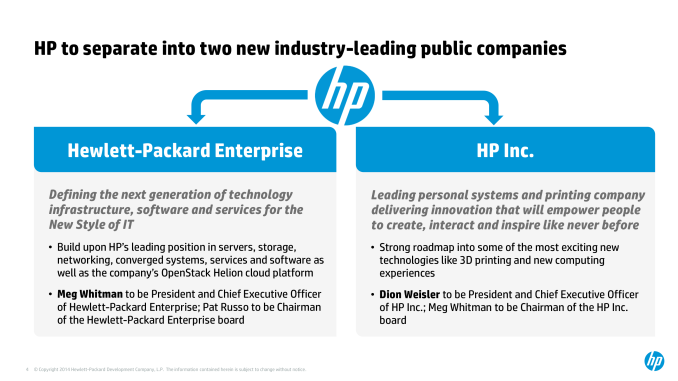
Hewlett-Packard Company, created in a garage by two electrical engineers in Palo Alto, California, started their company through the creation of superior test equipment. Through organic and acquisition means, HP had grown into consumer and enterprise markets, ranging from printers, to PC's, to mini-computers, networking equipment, and software. They are preparing to split into two different companies, one based upon consumer equipment and another based upon enterprise equipment. Prior the split, HP is filling gaps in their networking portfolio.
 |
| [Huawei-3Com Partnership Logo] |
Road to Aruba:
On September 26, 2014, HP announced the launch of a Software Defined Networking Application Store. acquisition of a Software Defined Network company. October 5, 2014 marks when HP announced the split between HP, Inc (for printers & desktops) and Hewlett-Packard Enterprise (for networking, server, and software.) Just days later, October 26, 2014, HP decided to find a buyer for H3C, the networking partnership between Chinese based Huawei and U.S. based 3Com which HP received when 3Com was acquired in 2010. Clearly, HP is committed to filling out their networking portfolio in the Enterprise company while culling some partnerships..
 |
| [Aruba Networks logo, courtesy Wikipedia] |
March 2015, HP announces the acquisition of Aruba, wireless network provider, filling a gap in their Networking portfolio, prior their corporate split between Desktop/Printer and Enterprise. Hewlett-Packard's networking division was experiencing some pain, according to The Register.
The deal will form a welcome plug to HP's sliding network biz, which fell 10.8 per cent to $562m (£365m) in the company's first quarter results last week.
Aruba posted sales of $729m (£473m) for its full year results in 2014. In its second quarter numbers last week, revenue rose 21 per cent to $212.9m (£138m) and net profit came in at $5.6m versus a net loss of $10.7m in the same quarter a year earlier.With larger quantities of networking moving from wired to wireless, the new growth area must be accounted for in Hewlett-Packard's portfolio. The Aruba Networking acquisition is expected to be complete in Hewlett-Packard's second quarter.
 |
| [HP Split Image, courtesy Anandtech] |
Divide and Conquer:
This is not the first split, for HP - Agilent Technologies was created when the Test Equipment division was spun-off 1999. The split of Printers and PC's, to form HP, Inc., should complete in October 2015. The PC and Enterprise markets are very different, requiring significant management style differences... the former requiring very short innovation cycles while the later demands long-term viability of a product with significant investment with close attention to security. Aruba should make an excellent contribution to the portfolio.

Hewlett-Packard Company was also famous for Network Management products, such as the formerly branded OpenView suite, which dominated the market during the 1990 as the Internet was aggressively expanding. HP's former OpenView suite consolidated into HP Software Division will find a very good home, in the new Hewlett-Packard Enterprise with Network Equipment vendors like Aruba. The combined 3Com, HP Networking, and Aruba portfolio will offer a reasonable platform for the Enterprise company, while the existing established Network and Systems Management suites will provide a software layer to unify the equipment for basic Fault, Performance, and Configuration Management in the Managed Services arena.