Friday, February 23, 2018

Cisco c3550 Password Recovery from SPARC Solaris

Cisco c3550 Password Recovery from SPARC Solaris


Abstract:

Sometimes, old lab equipment may sit around, operating well for years without interruption. In some cases, the password for older network lab equipment may have had it's authentication passwords lost. Network equipment is often in the same rack as a remote server. A Solaris Server can be easily used to gain console on various serial based network equipment to perform password recovery.

SPARC Server:

Physical serial ports on SPARC Solaris servers are often defined as tty's, vs pts's (Pseudo Terminals.)
Log into a server via a pts or pseudo terminal:
Last login: Tue Feb 20 14:44:39 2018 from sun1593.daytono
Sun Microsystems Inc.   SunOS 5.9       Generic May 2002
INTR=Ctrl-C ERASE=Ctrl-H KILL=Ctrl-U
/dev/pts/1
sun9999/user$
Example of physical terminal ports available on servers with a hardware serial port:
sun9999/user$ ls -al /dev/tty* | head -4
lrwxrwxrwx 1 root other 26 Mar 12 2016 /dev/tty ->
../devices/pseudo/sy@0:tty
lrwxrwxrwx 1 root root 6 Mar 12 2016 /dev/ttya -> term/a
lrwxrwxrwx 1 root root 6 Mar 12 2016 /dev/ttyb -> term/b
lrwxrwxrwx 1 root root 30 Mar 12 2016 /dev/ttyp0 ->
../devices/pseudo/ptsl@0:ttyp0
The ttya port is used for console access, while ttyb can be used with a Cisco console cable. The default speed for older equipment is 9600 baud.
sun9999/user$ tip -9600 /dev/ttyb
connected

Process for password recovery or just normal console usage can begin.

Cisco Console Equipment:

Depending on the configuration, a single carriage return may result in a read-only prompt or an  authentication sequence.
Switch>

A normal power cycle of the switch may look like the following on the console.

Switch> Base ethernet MAC Address: 00:11:93:a1:70:80

Xmodem file system is available.

The password-recovery mechanism is enabled.

Initializing Flash...
flashfs[0]: 87 files, 4 directories
flashfs[0]: 0 orphaned files, 0 orphaned directories
flashfs[0]: Total bytes: 15998976
flashfs[0]: Bytes used: 6642176
flashfs[0]: Bytes available: 9356800
flashfs[0]: flashfs fsck took 16 seconds.
...done Initializing Flash.
Boot Sector Filesystem (bs:) installed, fsid: 3
Loading "flash:c3550-i9q3l2-mz.121-20.EA1a/c3550-i9q3l2-mz.121-20.EA1a.bin"...###########################################################################################################################################################################################################################################################################################################################################################################################################
File "flash:c3550-i9q3l2-mz.121-20.EA1a/c3550-i9q3l2-mz.121-20.EA1a.bin" uncompressed and installed, entry point: 0x3000
executing...
              Restricted Rights Legend
Use, duplication, or disclosure by the Government is
subject to restrictions as set forth in subparagraph
(c) of the Commercial Computer Software - Restricted
Rights clause at FAR sec. 52.227-19 and subparagraph
(c) (1) (ii) of the Rights in Technical Data and Computer
Software clause at DFARS sec. 252.227-7013.
           cisco Systems, Inc.
           170 West Tasman Drive
           San Jose, California 95134-1706
Cisco Internetwork Operating System Software
IOS (tm) C3550 Software (C3550-I9Q3L2-M), Version 12.1(20)EA1a, RELEASE SOFTWARE (fc1)
Copyright (c) 1986-2004 by cisco Systems, Inc.
Compiled Mon 19-Apr-04 21:42 by yenanh
Image text-base: 0x00003000, data-base: 0x006B3454
Initializing flashfs...
flashfs[1]: 87 files, 4 directories
flashfs[1]: 0 orphaned files, 0 orphaned directories
flashfs[1]: Total bytes: 15998976
flashfs[1]: Bytes used: 6642176
flashfs[1]: Bytes available: 9356800
flashfs[1]: flashfs fsck took 8 seconds.
flashfs[1]: Initialization complete.
...done Initializing flashfs.
POST: CPU Buffer Tests : Begin
POST: CPU Buffer Tests : End, Status Passed
POST: CPU Interface Tests : Begin
POST: CPU Interface Tests : End, Status Passed
POST: Switch Core Tests : Begin
POST: Switch Core Tests : End, Status Passed
POST: CPU Interface 2nd Stage Tests : Begin
POST: CPU Interface 2nd Stage Tests : End, Status Passed
POST: CAM Subsystem Tests : Begin
POST: CAM Subsystem Tests : End, Status Passed
POST: Ethernet Controller Tests : Begin
POST: Ethernet Controller Tests : End, Status Passed
POST: ILP Controller Tests : Begin
POST: ILP Controller Tests : End, Status Passed
POST: Loopback Tests : Begin
POST: Loopback Tests : End, Status Passed
cisco WS-C3550-24-PWR (PowerPC) processor (revision H0) with 65526K/8192K bytes of memory.
Processor board ID CAT0829Z301
Last reset from warm-reset
Running Layer2/3 Switching Image
Ethernet-controller 1 has 12 Fast Ethernet/IEEE 802.3 interfaces
Ethernet-controller 2 has 12 Fast Ethernet/IEEE 802.3 interfaces
Ethernet-controller 3 has 1 Gigabit Ethernet/IEEE 802.3 interface
Ethernet-controller 4 has 1 Gigabit Ethernet/IEEE 802.3 interface
24 FastEthernet/IEEE 802.3 interface(s)
2 Gigabit Ethernet/IEEE 802.3 interface(s)
The password-recovery mechanism is enabled.
384K bytes of flash-simulated non-volatile configuration memory.
Base ethernet MAC Address: 00:11:93:A1:70:80
Motherboard assembly number: 73-8100-08
Power supply part number: 341-0029-03
Motherboard serial number: CAT08290FL9
Power supply serial number: DTH082326P8
Model revision number: H0
Motherboard revision number: A0
Model number: WS-C3550-24PWR-SMI
System serial number: CAT0829Z301
Press RETURN to get started!
00:00:33: %SPANTREE-5-EXTENDED_SYSID: Extended SysId enabled for type vlan
00:00:35: %SYS-5-CONFIG_I: Configured from memory by console
00:00:36: %SYS-5-RESTART: System restarted --
Cisco Internetwork Operating System Software
IOS (tm) C3550 Software (C3550-I9Q3L2-M), Version 12.1(20)EA1a, RELEASE SOFTWARE (fc1)
Copyright (c) 1986-2004 by cisco Systems, Inc.
Compiled Mon 19-Apr-04 21:42 by yenanh
00:00:36: %SNMP-5-COLDSTART: SNMP agent on host Switch is undergoing a cold start
00:00:37: %LINK-5-CHANGED: Interface Vlan1, changed state to administratively down
00:00:38: %LINEPROTO-5-UPDOWN: Line protocol on Interface Vlan1, changed state to down
Switch>

A single carriage return would bring a prompt or authentication sequence.

Cisco Switch Password Recovery

On the 3550 model switch, there is a button on the front console, which can be depressed during the power down to power up transition, which will bring the switch into ROM mode.


Base ethernet MAC Address: 00:11:93:a1:70:80

Xmodem file system is available.

The password-recovery mechanism is enabled.

The system has been interrupted prior to initializing the
flash filesystem.  The following commands will initialize
the flash filesystem, and finish loading the operating
system software:
    flash_init
    boot
switch:
Note: The "System" light may flash 22 times, and cease flashing. Release the "mode" switch.


After the mode switch is released, the "System" light may continue to blink. Perform a "flash_init"

switch: flash_init

Initializing Flash...

flashfs[0]: 87 files, 4 directories

flashfs[0]: 0 orphaned files, 0 orphaned directories
flashfs[0]: Total bytes: 15998976
flashfs[0]: Bytes used: 6642176
flashfs[0]: Bytes available: 9356800
flashfs[0]: flashfs fsck took 16 seconds.
...done Initializing Flash.
Boot Sector Filesystem (bs:) installed, fsid: 3
switch:
Note: This may take about 12 seconds.


Perform "load_helper", rename the configuration file holding the password.

switch: dir flash:/

Directory of flash://


2    -rwx  0                        env_vars
3    -rwx  348                      system_env_vars
4    -rwx  5                        private-config.text
6    -rwx  616                      vlan.dat
8    drwx  192                      c3550-i9q3l2-mz.121-20.EA1a
7    -rwx  3940                     config.text
9356800 bytes available (6642176 bytes used)
switch: rename flash:config.text flash:config.old
switch: dir flash:/
Directory of flash://
2    -rwx  0                        env_vars
3    -rwx  348                      system_env_vars
4    -rwx  5                        private-config.text
6    -rwx  616                      vlan.dat
8    drwx  192                      c3550-i9q3l2-mz.121-20.EA1a
7    -rwx  3940                     config.old
9356800 bytes available (6642176 bytes used)
switch:
Note: When the switch reboots, the file will be regenerated.


Now, "boot" switch and "[control][c]" to gain user mode, if initial configuration is not needed.
switch: boot
Loading "flash:c3550-i9q3l2-mz.121-20.EA1a/c3550-i9q3l2-mz.121-20.EA1a.bin"...###########################################################################################################################################################################################################################################################################################################################################################################################################

File "flash:c3550-i9q3l2-mz.121-20.EA1a/c3550-i9q3l2-mz.121-20.EA1a.bin" uncompressed and installed, entry point: 0x3000
executing...

              Restricted Rights Legend
Use, duplication, or disclosure by the Government is
subject to restrictions as set forth in subparagraph
(c) of the Commercial Computer Software - Restricted
Rights clause at FAR sec. 52.227-19 and subparagraph
(c) (1) (ii) of the Rights in Technical Data and Computer
Software clause at DFARS sec. 252.227-7013.

           cisco Systems, Inc.
           170 West Tasman Drive
           San Jose, California 95134-1706


Cisco Internetwork Operating System Software
IOS (tm) C3550 Software (C3550-I9Q3L2-M), Version 12.1(20)EA1a, RELEASE SOFTWARE (fc1)
Copyright (c) 1986-2004 by cisco Systems, Inc.
Compiled Mon 19-Apr-04 21:42 by yenanh
Image text-base: 0x00003000, data-base: 0x006B3454


Initializing flashfs...
flashfs[1]: 87 files, 4 directories
flashfs[1]: 0 orphaned files, 0 orphaned directories
flashfs[1]: Total bytes: 15998976
flashfs[1]: Bytes used: 6642176
flashfs[1]: Bytes available: 9356800
flashfs[1]: flashfs fsck took 8 seconds.
flashfs[1]: Initialization complete.
...done Initializing flashfs.
POST: CPU Buffer Tests : Begin
POST: CPU Buffer Tests : End, Status Passed
POST: CPU Interface Tests : Begin
POST: CPU Interface Tests : End, Status Passed
POST: Switch Core Tests : Begin
POST: Switch Core Tests : End, Status Passed
POST: CPU Interface 2nd Stage Tests : Begin
POST: CPU Interface 2nd Stage Tests : End, Status Passed
POST: CAM Subsystem Tests : Begin
POST: CAM Subsystem Tests : End, Status Passed
POST: Ethernet Controller Tests : Begin
POST: Ethernet Controller Tests : End, Status Passed
POST: ILP Controller Tests : Begin
POST: ILP Controller Tests : End, Status Passed
POST: Loopback Tests : Begin
POST: Loopback Tests : End, Status Passed

cisco WS-C3550-24-PWR (PowerPC) processor (revision H0) with 65526K/8192K bytes of memory.
Processor board ID CAT0829Z301
Last reset from warm-reset
Running Layer2/3 Switching Image

Ethernet-controller 1 has 12 Fast Ethernet/IEEE 802.3 interfaces
Ethernet-controller 2 has 12 Fast Ethernet/IEEE 802.3 interfaces
Ethernet-controller 3 has 1 Gigabit Ethernet/IEEE 802.3 interface
Ethernet-controller 4 has 1 Gigabit Ethernet/IEEE 802.3 interface
24 FastEthernet/IEEE 802.3 interface(s)
2 Gigabit Ethernet/IEEE 802.3 interface(s)

The password-recovery mechanism is enabled.
384K bytes of flash-simulated non-volatile configuration memory.
Base ethernet MAC Address: 00:11:93:A1:70:80
Motherboard assembly number: 73-8100-08
Power supply part number: 341-0029-03
Motherboard serial number: CAT08290FL9
Power supply serial number: DTH082326P8
Model revision number: H0
Motherboard revision number: A0
Model number: WS-C3550-24PWR-SMI
System serial number: CAT0829Z301

         --- System Configuration Dialog ---
Would you like to enter the initial configuration dialog? [yes/no]:
00:00:33: %SPANTREE-5-EXTENDED_SYSID: Extended SysId enabled for type vlan
00:00:37: %SYS-5-RESTART: System restarted --
Cisco Internetwork Operating System Software
IOS (tm) C3550 Software (C3550-I9Q3L2-M), Version 12.1(20)EA1a, RELEASE SOFTWARE (fc1)
Copyright (c) 1986-2004 by cisco Systems, Inc.
Compiled Mon 19-Apr-04 21:42 by yenanh
00:00:37: %SNMP-5-COLDSTART: SNMP agent on host Switch is undergoing a cold start


Press RETURN to get started!


00:01:29: %LINK-5-CHANGED: Interface Vlan1, changed state to administratively down
00:01:30: %LINEPROTO-5-UPDOWN: Line protocol on Interface Vlan1, changed state to down
Switch>
Note: the switch is now in unprivileged "user" mode.

Configuration work can be done from the "enable" privileged mode.


Switch> enable
Switch# show running-config
Building configuration...
Current configuration : 1995 bytes
!
version 12.1
no service pad
service timestamps debug uptime
service timestamps log uptime
no service password-encryption
!
hostname Switch
!
!
ip subnet-zero
!
!
spanning-tree mode pvst
spanning-tree extend system-id
!
!
!
!
interface FastEthernet0/1
 switchport mode dynamic desirable
!
interface FastEthernet0/2
 switchport mode dynamic desirable
!
interface FastEthernet0/3
 switchport mode dynamic desirable
!
interface FastEthernet0/4
 switchport mode dynamic desirable
!
interface FastEthernet0/5
 switchport mode dynamic desirable
!
interface FastEthernet0/6
 switchport mode dynamic desirable
!
interface FastEthernet0/7
 switchport mode dynamic desirable
!
interface FastEthernet0/8
 switchport mode dynamic desirable
!
interface FastEthernet0/9
 switchport mode dynamic desirable
!
interface FastEthernet0/10
 switchport mode dynamic desirable
!
interface FastEthernet0/11
 switchport mode dynamic desirable
!
interface FastEthernet0/12
 switchport mode dynamic desirable
!
interface FastEthernet0/13
 switchport mode dynamic desirable
!
interface FastEthernet0/14
 switchport mode dynamic desirable
!
interface FastEthernet0/15
 switchport mode dynamic desirable
!
interface FastEthernet0/16
 switchport mode dynamic desirable
!
interface FastEthernet0/17
 switchport mode dynamic desirable
!
interface FastEthernet0/18
 switchport mode dynamic desirable
!
interface FastEthernet0/19
 switchport mode dynamic desirable
!
interface FastEthernet0/20
 switchport mode dynamic desirable
!
interface FastEthernet0/21
 switchport mode dynamic desirable
!
interface FastEthernet0/22
 switchport mode dynamic desirable
!
interface FastEthernet0/23
 switchport mode dynamic desirable
!
interface FastEthernet0/24
 switchport mode dynamic desirable
!
interface GigabitEthernet0/1
 switchport mode dynamic desirable
!
interface GigabitEthernet0/2
 switchport mode dynamic desirable
!
interface Vlan1
 no ip address
 shutdown
!
ip classless
ip http server
!
!
line con 0
line vty 5 15
!
!
end

Switch#

The switch is ready to be configured.

A Simple Configuration

Name switch "C3550", encrypt "cisco" password in MD5, and save running configuration.

Switch# configure terminal

Enter configuration commands, one per line.  End with CNTL/Z.

Switch(config)# hostname C3550


C3550(config)# enable secret cisco
C3550# copy running-config startup-config
Destination filename [startup-config]?
Building configuration...
[OK]
C3550(config)# exit

Note: the simple "cisco" password above should not be used, choose a stronger password.


The saved password can  be tested via a restart of the switch.

Show Saved Startup Configuration

The running and startup configuration should be the same. Show the startup configuration.
C3550# show startup-config
Using 2041 out of 393216 bytes
!
version 12.1
no service pad
service timestamps debug uptime
service timestamps log uptime
no service password-encryption
!
hostname C3550
!
enable secret 5 $1$nOpq$3Hg6AloyI74Vq0HV0uwTq0
!
ip subnet-zero
!
!
spanning-tree mode pvst
spanning-tree extend system-id
!
!
!
!
interface FastEthernet0/1
switchport mode dynamic desirable
!
interface FastEthernet0/2
switchport mode dynamic desirable
!
interface FastEthernet0/3
switchport mode dynamic desirable
!
interface FastEthernet0/4
switchport mode dynamic desirable
!
interface FastEthernet0/5
switchport mode dynamic desirable
!
interface FastEthernet0/6
switchport mode dynamic desirable
!
interface FastEthernet0/7
switchport mode dynamic desirable
!
interface FastEthernet0/8
switchport mode dynamic desirable
!
interface FastEthernet0/9
switchport mode dynamic desirable
!
interface FastEthernet0/10
switchport mode dynamic desirable
!
interface FastEthernet0/11
switchport mode dynamic desirable
!
interface FastEthernet0/12
switchport mode dynamic desirable
!
interface FastEthernet0/13
switchport mode dynamic desirable
!
interface FastEthernet0/14
switchport mode dynamic desirable
!
interface FastEthernet0/15
switchport mode dynamic desirable
!
interface FastEthernet0/16
switchport mode dynamic desirable
!
interface FastEthernet0/17
switchport mode dynamic desirable
!
interface FastEthernet0/18
switchport mode dynamic desirable
!
interface FastEthernet0/19
switchport mode dynamic desirable
!
interface FastEthernet0/20
switchport mode dynamic desirable
!
interface FastEthernet0/21
switchport mode dynamic desirable
!
interface FastEthernet0/22
switchport mode dynamic desirable
!
interface FastEthernet0/23
switchport mode dynamic desirable
!
interface FastEthernet0/24
switchport mode dynamic desirable
!
interface GigabitEthernet0/1
switchport mode dynamic desirable
!
interface GigabitEthernet0/2
switchport mode dynamic desirable
!
interface Vlan1
no ip address
shutdown
!
ip classless
ip http server
!
!
line con 0
line vty 5 15
!
!
end

C3550#

Note: the added configuration lines above are easily identified.

Test Startup Configuration  through Switch Reload

Reboot switch with "reload" to test simple configuration and privileged "enable" password.
C3550# reload
Proceed with reload? [confirm]
01:02:58: %SYS-5-RELOAD: Reload requested
Base ethernet MAC Address: 00:11:93:a1:70:80
Xmodem file system is available.
The password-recovery mechanism is enabled.
Initializing Flash...
flashfs[0]: 88 files, 4 directories
flashfs[0]: 0 orphaned files, 0 orphaned directories
flashfs[0]: Total bytes: 15998976
flashfs[0]: Bytes used: 6644224
flashfs[0]: Bytes available: 9354752
flashfs[0]: flashfs fsck took 16 seconds.
...done Initializing Flash.
Boot Sector Filesystem (bs:) installed, fsid: 3
Loading "flash:c3550-i9q3l2-mz.121-20.EA1a/c3550-i9q3l2-mz.121-20.EA1a.bin"...###########################################################################################################################################################################################################################################################################################################################################################################################################
File "flash:c3550-i9q3l2-mz.121-20.EA1a/c3550-i9q3l2-mz.121-20.EA1a.bin" uncompressed and installed, entry point: 0x3000
executing...

              Restricted Rights Legend
Use, duplication, or disclosure by the Government is
subject to restrictions as set forth in subparagraph
(c) of the Commercial Computer Software - Restricted
Rights clause at FAR sec. 52.227-19 and subparagraph
(c) (1) (ii) of the Rights in Technical Data and Computer
Software clause at DFARS sec. 252.227-7013.
           cisco Systems, Inc.
           170 West Tasman Drive
           San Jose, California 95134-1706


Cisco Internetwork Operating System Software
IOS (tm) C3550 Software (C3550-I9Q3L2-M), Version 12.1(20)EA1a, RELEASE SOFTWARE (fc1)
Copyright (c) 1986-2004 by cisco Systems, Inc.
Compiled Mon 19-Apr-04 21:42 by yenanh
Image text-base: 0x00003000, data-base: 0x006B3454

Initializing flashfs...
flashfs[1]: 88 files, 4 directories
flashfs[1]: 0 orphaned files, 0 orphaned directories
flashfs[1]: Total bytes: 15998976
flashfs[1]: Bytes used: 6644224
flashfs[1]: Bytes available: 9354752
flashfs[1]: flashfs fsck took 8 seconds.
flashfs[1]: Initialization complete.
...done Initializing flashfs.
POST: CPU Buffer Tests : Begin
POST: CPU Buffer Tests : End, Status Passed
POST: CPU Interface Tests : Begin
POST: CPU Interface Tests : End, Status Passed
POST: Switch Core Tests : Begin
POST: Switch Core Tests : End, Status Passed
POST: CPU Interface 2nd Stage Tests : Begin
POST: CPU Interface 2nd Stage Tests : End, Status Passed
POST: CAM Subsystem Tests : Begin
POST: CAM Subsystem Tests : End, Status Passed
POST: Ethernet Controller Tests : Begin
POST: Ethernet Controller Tests : End, Status Passed
POST: ILP Controller Tests : Begin
POST: ILP Controller Tests : End, Status Passed
POST: Loopback Tests : Begin
POST: Loopback Tests : End, Status Passed
cisco WS-C3550-24-PWR (PowerPC) processor (revision H0) with 65526K/8192K bytes of memory.
Processor board ID CAT0829Z301
Last reset from warm-reset
Running Layer2/3 Switching Image
Ethernet-controller 1 has 12 Fast Ethernet/IEEE 802.3 interfaces
Ethernet-controller 2 has 12 Fast Ethernet/IEEE 802.3 interfaces
Ethernet-controller 3 has 1 Gigabit Ethernet/IEEE 802.3 interface
Ethernet-controller 4 has 1 Gigabit Ethernet/IEEE 802.3 interface
24 FastEthernet/IEEE 802.3 interface(s)
2 Gigabit Ethernet/IEEE 802.3 interface(s)
The password-recovery mechanism is enabled.
384K bytes of flash-simulated non-volatile configuration memory.
Base ethernet MAC Address: 00:11:93:A1:70:80
Motherboard assembly number: 73-8100-08
Power supply part number: 341-0029-03
Motherboard serial number: CAT08290FL9
Power supply serial number: DTH082326P8
Model revision number: H0
Motherboard revision number: A0
Model number: WS-C3550-24PWR-SMI
System serial number: CAT0829Z301

Press RETURN to get started!

00:00:33: %SPANTREE-5-EXTENDED_SYSID: Extended SysId enabled for type vlan
00:00:35: %SYS-5-CONFIG_I: Configured from memory by console
00:00:35: %SYS-5-RESTART: System restarted --
Cisco Internetwork Operating System Software
IOS (tm) C3550 Software (C3550-I9Q3L2-M), Version 12.1(20)EA1a, RELEASE SOFTWARE (fc1)
Copyright (c) 1986-2004 by cisco Systems, Inc.
Compiled Mon 19-Apr-04 21:42 by yenanh
00:00:35: %SNMP-5-COLDSTART: SNMP agent on host C3550 is undergoing a cold start
00:00:37: %LINK-5-CHANGED: Interface Vlan1, changed state to administratively down
00:00:38: %LINEPROTO-5-UPDOWN: Line protocol on Interface Vlan1, changed state to down
C3550>
C3550>enable
Password:
C3550#
Note: There is no remote access at this point and all interfaces are defaulted to VLAN1

The switch needs a complex password, but it will operate when  equipment is attached.

Wednesday, February 21, 2018

Solaris: ISO or USB Media with Update Releases

Occasionally, management of infrastructure requires users to have original images of various releases to perform activities such as booting and having compatibility with various file systems.

Oracle Support maintains a list of media with update releases for Solaris, dating back to Oracle 8.


One use case is to create a Solaris 11 OS image readable by the latest versions of Solaris 10.

Friday, December 8, 2017

Raspberry Pi GPIO


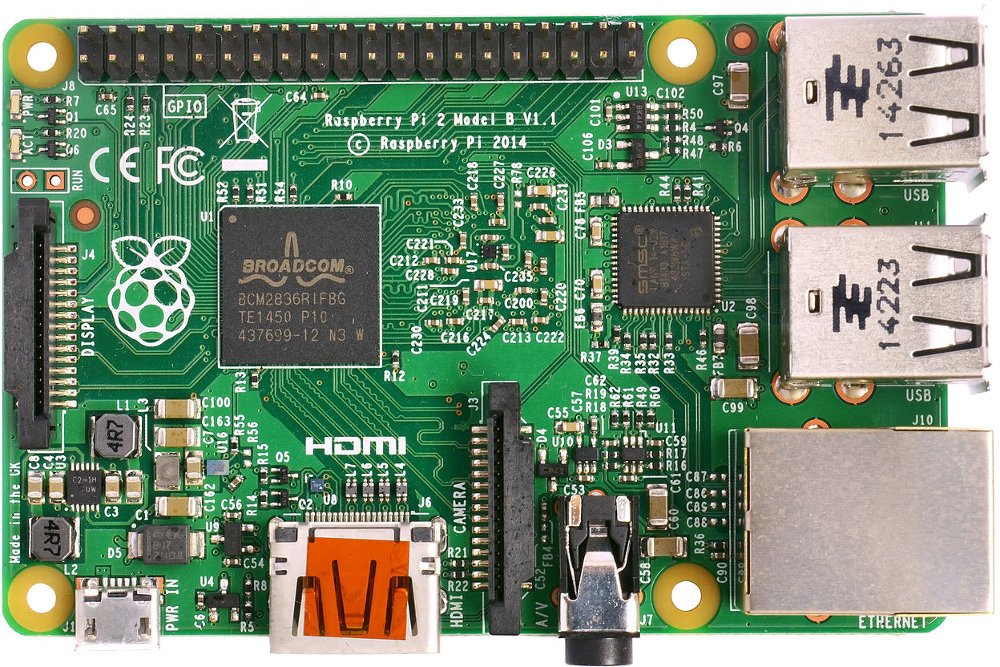
[Raspberry Pi2, courtesy SocialCompare]

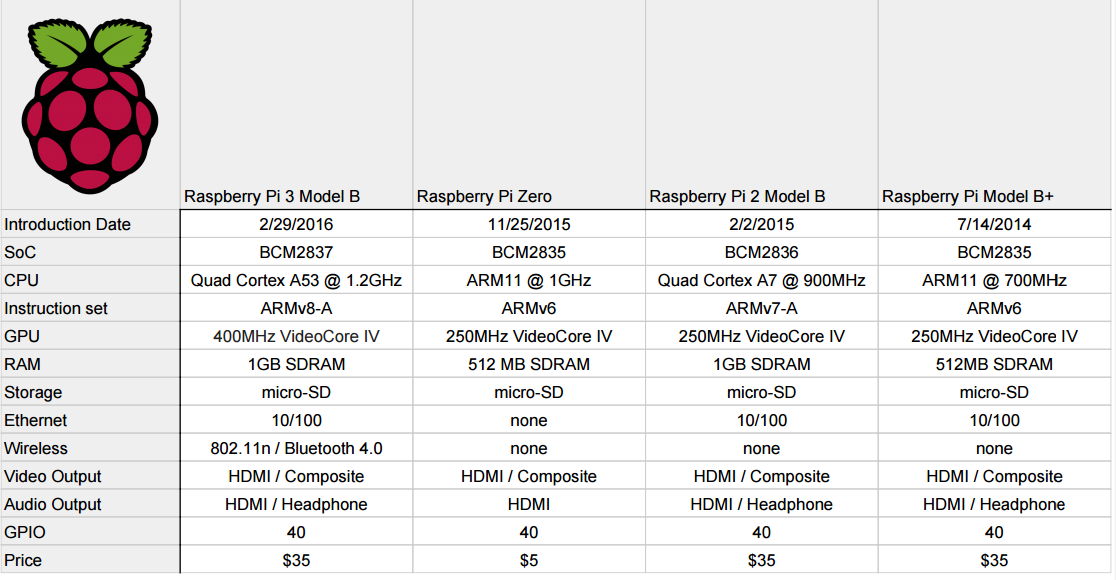
Looking for a Raspberry Pi comparison chart between models?

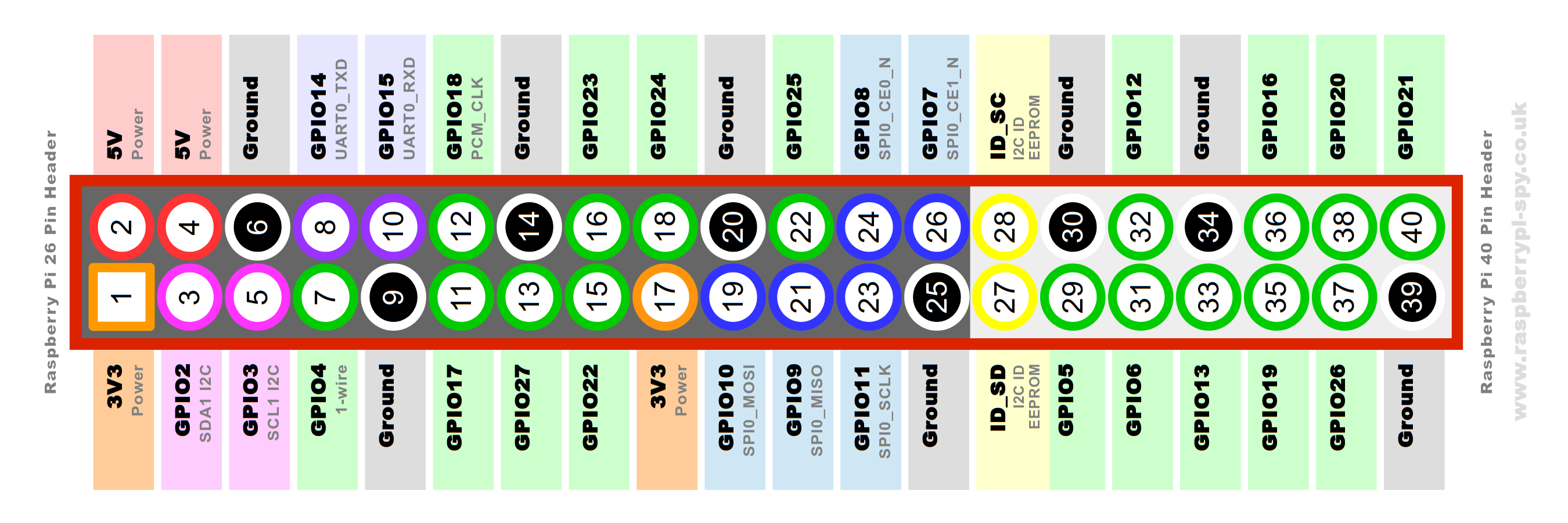
[Raspberry Pi GPIO Layout - Model B+ courtesy raspberrypi-spy]

How about a Raspberry Pi GPIO comparison between models?

[Python, courtesy The Green Place]
How does one use GPIO pins? GPIO without Python is possible.

Monday, November 27, 2017

Net Neutrality: Dodging Government Bullets & Disabling The Shooter

Abstract:

The Internet had been an open agreement between various peers, where one organization chooses to allow access from another peer organization if they both provide similar traffic patterns. Mutual organizational agreement with unfettered freedom in the United States had created the most aggressively growing and robust redundant network the world has ever known. Freedom in the United States had changed with the former Presidential appointees producing some 400 pages of regulation on behalf of political donors... and the search for freedom is happening again.

What is The Internet?

The world-wide community of volunteers created the Internet Engineering Task Force (IETF) to perform the care-taking aspects of The Internet. The Internet's stewards define The Internet as:
The Internet: A large, heterogeneous collection of interconnected
systems that can be used for communication of many different types
between any interested parties connected to it.  The term includes
both the "core Internet" (ISP networks) and "edge Internet"
(corporate and private networks, often connected via firewalls,
NAT boxes, application layer gateways and similar devices).  The
Internet is a truly global network, reaching into just about every
country in the world.
 They have declared their support
The IETF community wants the Internet to succeed because we
believe that the existence of the Internet, and its influence on
economics, communication, and education, will help us to build a
better human society.
  Ultimately, The Internet has been a self-regulating body. They define their scope as:
The Internet isn't value-neutral, and neither is the IETF.  We want
the Internet to be useful for communities that share our commitment
to openness and fairness.  We embrace technical concepts such as
decentralized control, edge-user empowerment and sharing of
resources, because those concepts resonate with the core values of
the IETF community.  These concepts have little to do with the
technology that's possible, and much to do with the technology that
we choose to create.
 The "concepts" embraced by The Internet's Stewards have experienced some difficulty, lately.

[1995-2010 Internet Usage Trend, courtesy tubularinsights]

Protecting The Internet For Fair Use and From Abuse

There is NEVER enough bandwidth on a telecommunication carrier's network to provide peak possible bandwidth for all customers at the same time. Customers are over-provisioned and share resources at different points along the entire way. This becomes especially noticeable during peak times, like breakfast, lunch, students coming home from school, adults getting home from work. Most people want to be able to check email, check voice mail, check social media accounts, do homework, submit papers from home, get the news, etc. Normally, these are interactive protocols, where user experience suffers the most during peak times.

The U.S. Government protected legitimate application providers, who compete with the carriers. (i.e. Vonage vs Madison River in 2005), while allowing carriers to protect normal interactive web surfing customers from a few heavy network bandwidth non-interactive [mostly illegal] bulk file tools (i.e. peer-to-peer transfers 2007.) Most people complain about traffic being sporadically blocked. Carriers maintain heuristics of the traffic volumes, times, and when they get the most trouble ticket calls in from their customers. Reducing trouble calls from a majority of paying customers is a high priority, with shared resources... especially when bulk transfers can resend data with little impact when people's usage of interactive usage diminishes. As time progresses, the percentage of interactive web traffic (and "other" traffic) is getting increasingly squeezed by Video.

[Indigenous peoples protecting from Viking Invaders, courtesy IFTN ]

Protecting The Internet from Attack

Recently, the Internet Engineering Task Force (IETF) has come out against intrusion into Privacy by Hacking by various Government and Criminal Organizations. The Internet's care-takers had released a clear public memo regarding privacy in 2014 - RFC7258:
Abstract

Pervasive monitoring is a technical attack that should be mitigated
in the design of IETF protocols, where possible.
 
Status of This Memo

This memo documents an Internet Best Current Practice.

This document is a product of the Internet Engineering Task Force
(IETF).  It represents the consensus of the IETF community.  It has
received public review and has been approved for publication by the
Internet Engineering Steering Group (IESG).
This 2014 decision placed the Internet's Care-Taker in direct competition with: Criminal Organizations, trying to steal identification information for nefarious purposes; Terrorist Organizations, trying to kill, maim, and destroy the lives of civilians; Government Organizations, trying to monitor terrorist activity in order to fulfill their role in protecting citizens.


[Ethernet Cable, courtesy The Register]

Government Attacks The Internet

Soon after The Internet Engineering Task Force suggests government was a hostile actor through "pervasive monitoring" (along with organized crime, terrorists and criminals, one might suppose), government regulators proved they were.

[Funny Video Entertainment, courtesy The Archive]

Net Neutrality: Pretext for Bondage Required

People do not normally give up their freedom, without a fight, and people do not normally successfully take away freedom without a pretext. The 2015 FCC rules for Government to constrain The Internet did not occur in a vacuum.

[Kowtow or bowing image, courtesy Wikipedia]

Net Neutrality: Failed Election Results & Campaign Donors 

January 2014, a federal appeals court struck down FCC’s first Internet Regulation attempt.

After an election year beating, November 2014, the former U.S. President demanded regulation of the Internet. The Crony Capitalists the former President kowtowed to, in order to reward them for their campaign dollars during a horrible Democratic election season, had their demands revealed by the New York Times:
Etsy, Kickstarter and Vimeo, among others, met with Megan J. Smith, Mr. Obama’s chief technology officer, and other senior officials to ask the president to lean on the F.C.C. to impose the stricter rules
When the big campaign donors come, one can be sure that politicians listen, and the poor political showing became the pretext for the government assault on The Internet. Retribution begins.

The former President used phrases appealing to voters selfishness and populism, with a modern re-branding of Red Communism ideology, declaring that "fast lanes" should not exist for the Internet. (The irony is people buy "fast lanes" to the internet, all the time, when they purchase bandwidth.)


[Bound in Chains image, courtesy Candid Kerry]

Net Neutrality: Binding the Freeman:

In 2015, the U.S. Government published their 400 page Regulation of the U.S. Internet. Some foreign technical journals have tried to put a "positive spin" on American Government putting shackles on previously unfettered Internet, but reciting the Government's suggestion that "400 pages" of regulation is a “light-touch” is preposterous.

Comparing the first (400 page) Internet Rule to ~100 years of "more than 700 codified rules and statutory provisions" placed on the former U.S. Telecommunications Monopoly is deceptive, at best. This is the beginning of a never-ending cycle of regulation, which will not stop, as demonstrated by decades of history and millions of pages of regulation.


[Formerly Free: Inexpensive Voice Service]

Net Neutrality: Impact the Freeman

As already discussed, The Internet Engineering Task Force caretakers wrote in their mission that the Internet is "used for communication of many different types". Not all communication is equal.

One type of traffic, Voice over IP communication for example, is HIGHLY dependent upon Quality of Service. This means that your voice will sound crackly may echo if the traffic is not prioritized to run faster than other traffic (like a web page loading, a pirated movie download, or movie streaming.) In the past, companies were able to pay for their traffic protocol to be prioritized for timely service (consuming no additional bandwidth), but that has now been made illegal.


[Man being whipped, courtesy Citizen Warrior]

Net Neutrality: VoIP - The First Whipping Boy

Reading through the 400 page Executive Branch Edict document shows one of the very first victims:
18. No Paid Prioritization.
Paid prioritization occurs when a broadband provider accepts payment (monetary or otherwise) to manage its network in a way that benefits particular content, applications, services, or devices. To protect against “fast lanes,” this Order adopts a rule that establishes that:
A person engaged in the provision of broadband Internet access service, insofar as such person is so engaged, shall not engage in paid prioritization. “Paid prioritization” refers to the management of a broadband provider’s network to directly or indirectly favor some traffic over other traffic, including through use of techniques such as traffic shaping, prioritization, resource reservation, or other forms of preferential traffic management, either (a) in exchange for consideration (monetary or otherwise) from a third party, or (b) to benefit an affiliated entity.18
The underlining was for clarity. The IETF clearly understands that "communications of many different types" requires different treatment. The technical mechanisms of achieving these communications include what was just made "illegal", without Congress even writing a law! What does footnote 18 say?
18. Unlike the no-blocking and no-throttling rules, there is no “reasonable network management” exception to the paid prioritization rule because paid prioritization is inherently a business practice rather than a network management practice.
VoIP traffic was certainly in the cross-hairs, when this rule was made. Any protections designed by groups of "smart people" over man years had been made illegal, through the stroke of a pen. This appears to be a "Crony Capitalism" move, by the former Administration appointees, eliminating competition with those who are not one of the big three carrier types (i.e. wireless, wire-line, and cable.)

Any college drop-out who took Telecommunications 101 understands the need for different types of service, such as Voice over IP. There is a cost, to manually create the rules, manually check the rules, and provision such rules. Requesting reimbursement for manual processes of unique customer traffic with special timeliness needs, to implement IETF engineering solutions, is certainly reasonable. If it were not "reasonable" - the industry would not have invested thousands of man-hours solving the technical problem. The politicians were clearly unreasonable.


[Remote Surgical Robot, courtesy Wikipedia]

Net Neutrality: Medicine - Killing Lifesaving Innovation

Voice over IP is not the only type of service which could require prioritization. Prioritization is only one of the methodologies now illegal to use on The Internet, to guarantee Quality of Service, through minimizing latency and optimizing connectivity. Highly skilled surgeons performing remote control operations via robots to small hospitals in remote rural areas in a nation or third world countries require Quality of Service.
The first true and complete remote surgery was conducted on 7 September 2001 across the Atlantic Ocean, with French surgeon (Dr. Jacques Marescaux) in New York performing a cholecystectomy on a 68-year-old female patient 6,230 km away in Strasbourg, France. It was named Operation Lindbergh.[5] after Charles Lindbergh’s pioneering transatlantic flight from New York to Paris. France Telecom provided the redundant fiberoptic ATM lines to minimize latency and optimize connectivity, and Computer Motion provided a modified Zeus robotic system. After clinical evaluation of the complete solution in July 2001, the human operation was successfully completed on 9/7/2001.
This life saving technology, dating back ~15 years, has been conducted over The Internet, reducing costs.
To date Dr. Anvari, a laparoscopic surgeon in Hamilton, Canada, has conducted numerous remote surgeries on patients in North Bay, a city 400 kilometres from Hamilton.[citation needed] Even though he uses a VPN over a non-dedicated fiberoptic connection that shares bandwidth with regular telecommunications data, Dr. Anvari has not had any connection problems during his procedures.
Requesting to pay to ensure internet traffic for life-saving medical treatment get priority over people watching movies or pirating illegal content at home is now illegal, in the United States... unless one wants to purchase dedicated network bandwidth [a "fast lane"] bypassing The Internet, at a significant premium to the hospitals (and patients) involved.

The cynic might suggest that this was also political payback, negatively impacting the health care of people in rural areas, since these citizens often did not vote for the former Administration or his political party. (The faster the contrary citizens die off, the more quickly political power can be re-consolidated)


[Neo from The Matrix image courtesy DailyPop.in]

Net Neutrality: Fast Lanes Created - Dodging Government Bullets

About a year later in 2016, The Internet has quietly been changing. The Register sums up the issue:
"Today's Problem... Latency and jitter are very real problems for real-time applications like voice and video, and anything over the public internet will experience spikes and variations in both. Peering spats between ISPs can and do cause throughput problems when different locations are on different ISPs. In short, unmanaged public internet is not really a great choice when reliable connectivity..."

Since providers in the United States can no longer prioritize network traffic over the public internet, a redundant network is built along side the Internet connections, and a new case for routing is executed.
...an emerging technology called Dynamic Path Selection (DPS). DPS actually looks at what types of traffic are in use (for example, by looking at destination port numbers) and chooses different paths for the traffic based on that.
...latency-sensitive applications can be fired over managed WAN connections for some or all of the journey. These can ride the MPLS connectivity all the way to the destination, or merely take advantage of the lower latency in order to get to an internet breakout point that is geographically (or logically) closer to the destination.
A similar solution to the Executive Order items made illegal, a little more expensive, but the solution is no longer available for regular consumers and hidden behind the complexity of "cheap internet".


[Self Driving Car Fatality picture, courtesy USA Today]

Net Neutrality: Automobiles - Avoiding Road Deaths

In 2017, a new application appeared, commonly referred to as "self driving cars". Prioritizing real-time network traffic over The Internet, could offer fewer risks to the hundreds of millions of citizens who would be at-risk from a few network packets not reaching their destination in a timely fashion when dealing with road conditions (i.e. obstacles, sudden bad weather, road failures, crashes, etc.)

Of course, just as businesses have always done, if the Net Neutrality rule is not lifted, the Automobile Industry will just build parallel "fast lanes", pass the higher cost down to the wealthier consumer who is able to pay for the cost uplift for safety... or pass the traffic over The Internet [without prioritization] and Americans would suffer the [possibly fatal] consequences of dropped or late packets because of Internet video-on-demand programming, pirating, and porn.


[Russian Jaeger Mark-1 "Cherno Alpha" model from Pacific Rim courtesy GoodSmile]

Net Neutrality: Million Russian Robots to Defend

In 2017, when it became apparent that the previous Government Executive appointees made the only workable solutions [for United States telecommunications, medical, and businesses with other time-sensitive traffic], was to build parallel "fast lanes" everywhere, the call for canceling Net Neutrality became more aggressive.

The call was answered unusually - by millions of Robots, often Robots from Russia, to fight for & against American Citizen interests. The politicization by technically inept decision-makers, to make illegal many man-years of IETF efforts to solve technical problems plaguing common Americans, was bad enough. Calling in robots, to help facilitate even more technically ignorant, to stop the rollback of horrible policy which negatively impacted Americans most vulnerable [who could not afford to buy their own "fast lanes", like the wealthy & businesses could] was completely unreasonable.


[North American Internet Usage by Type as of March 2016, courtesy Statista]

The Changing Face of The Internet

As time goes on, usage on The Internet has changed. The downward trend with pirated copyright material continues declining, with low cost streaming options readily available. Bulk buffered video streaming now dominates the usage, with interactive buffered video streaming as a distant second. All other TCP/IP protocols are now considered marginal, by volume. Peak usage time is becoming evenings, as people passively stream to their televisions at home.

New and innovative protocols will be so small, by volume in comparison, that they will not even be quantifiable on a "Top Usage" graph. These protocols will be heavily impacted during peak congestion times by network traffic far protocols consuming far greater bandwidth. There is a true danger for innovation in the realm of low bandwidth but time sensitive applications, such as real-time IoT applications, which have the potential to greatly enhance the lives of American Citizens, not to mention the world.

Conclusion

December 15th in 2017 is the date for the Net Neutrality showdown. Beware of "Appeals to Selfishness" by those who proclaim a "Noble Cause". All should hope for a simple document, eliminating government coercion, and a return to the IETF to provide technological solutions to technology problems... a disabling of "the shooter."  It is time to end the experiment called "Net Neutrality", end Obama Era "Fast Lanes", add a half-decade's worth of previously over provisioned private "Fast Lane" bandwidth for normal every day Americans on The Internet, and innovate by re-legalizing the offering of Quality of Service guarantees on The Internet for lower bandwidth protocols requiring real-time responsiveness.

Wednesday, November 15, 2017

Other Blogs Column Updated!


Significant effort went into updating the Other Blogs column.

Why?

Previously followed blogs were no longer existing or moved to new URL's.

Many of old sources have departed from the Solaris & SPARC scene so long ago, some offering little to current news in Oracle SPARC, Oracle Solaris, Systems, or Networking.

An attempt has been made to rationalize significant primary sources by pushing them to the top of the list, while pushing down former primary sources or former secondary sources or less frequently updated blogs to the bottom of the list.

Wednesday, October 18, 2017

[Raspberry Pi 3 Thermal Profile under load, Courtesy Microsoft]


Pushing Raspberry Pi 3 Limits

Abstract:

Embedded systems continue to gain in processing power, from MHz to GHz. The market had moved from 8, to 16, to 32, and finally to 64 bits with processors. Modern embedded systems like the Raspberry Pi 3 both work at high clock rates and process a lot of bits. When pushed aggressively, the Raspberry Pi 3 will shut down.

[Raspberry Pi Configurations, Courtesy Hackaday]

Variety:

The Raspberry Pi platform comes in a variety of different configurations, the most recent release provides the most compute power in an embedded system. The  most recent, on the left of the chart from Hackaday, provides the most compute power and functionality.

Conclusions:

If light duty embedded systems is desired, then there is much burst capacity available in the Raspberry Pi. If heavier duty loads are to be placed upon a system, proper cooling facilities most be considered.