Monday, December 30, 2013

Security: A Linux Server Exploit


Why do people want to hack your server? Maybe it is to mine BITCOINS!
http://arstechnica.com/security/2013/12/anatomy-of-a-hack-what-a-successful-exploit-of-a-linux-server-looks-like/
Like most mainstream operating systems these days, fully patched installations of Linux provide a level of security that requires a fair amount of malicious hacking to overcome. Those assurances can be completely undone by a single unpatched application, as Andre' DiMino has demonstrated when he documented an Ubuntu machine in his lab being converted into a Bitcoin-mining, denial-of-service-spewing, vulnerability-exploiting hostage under the control of attackers.


Wednesday, December 25, 2013

Processor War: Google to Manufacture ARM?


[Datacenter Image, courtsy ARS Technica]
 Google maybe thinking about making their own ARM central processing units
http://arstechnica.com/information-technology/2013/12/report-google-contemplates-homemade-arm-chips-to-power-its-servers/
We've already seen consumer technology companies like Apple and Samsung become more vertically integrated in the last few years—Apple designs its own phones and tablets, the chips that go in them, and the architecture that goes into the chips, for example. Just as Apple's software benefits from tight integration with Apple's hardware, Google is reportedly eyeing chip design as a way to "better manage the interactions between hardware and software."

[Sun Microsystems Logo]
Of course, Sun (and now Oracle), have seen a similar benefit with SPARC, over the years. Sun Microsystems was able to drive volume in their market, but as manufacturing costs rose, the market needed to grow accordingly. The UNIX market had found ways to differentiate themselves from the consumer market, but that market shrank as the consumer market canibalized it. There needs to be a large enough market to make the investment profitable in this high-cost and high-risk arena.


[Sun Ray Terminal]
Google is large enough, to make such an investment profitable, and they have a large enough investment in ARM hardware software with the Mobile consumer market. This does not guarantee survival, however, as Oracle demonstrated their desire to exit the desktop appliance market with the discontinuing of their Sun Ray product, when they could have invested in SPARC or ARM for the Sun Ray to make an additional consumer for their SPARC processor investment, hedge the investment in SPARC processor in skilled programmers, and created a new market driver for Oracle's Cloud offering using Sun Ray appliances.

Monday, December 23, 2013

Android: Incompatibilities - Hacking & Coding Practices

[Courtesy: Android Authority]
Some people have been discussing Android compatibility recently.

Most of the incompatibilities surround screen size and camera size.
http://developer.android.com/.../pract.../compatibility.html

Sometimes, people can just code their apps differently, in order to make their apps compatible across more devices.
http://stackoverflow.com/.../android-app-is-incompatible...

There have been hacks created, so people can download incompatible apps... but there is generally a reason why these apps are generally tagged as incompatible.
http://www.androidauthority.com/how-to-install.../


Hope this short note is helpful!

Friday, December 20, 2013

ARM: Calxeda Runs Out of Money

[Calxeda ARM processor, courtesy ComputerWorld]
The developer of 64 bit ARM processors closed down, the week before Christmas. Calxeda is going through restructuring. The world may still see a 64 bit ARM from this company, yet. Previously, their 32 bit ARM processors were well received by the market. In 2011, Calxeda announced the development of a 480 core low power server, to be consumed by Hewlett Packard. The "Moonshot" servers from HP may be negatively impacted - HP's attempt at resuming RISC processor platform production may be in chaos.

Wednesday, December 18, 2013

Malware: Targeting Linux Platforms


[Screenshot courtesy ARS Technica]
This is not the first case of such worms, targeting Internet devices, in this case Intel based only.
http://arstechnica.com/security/2013/11/new-linux-worm-targets-routers-cameras-internet-of-things-devices/
Researchers have discovered a Linux worm capable of infecting a wide range of home routers, set-top boxes, security cameras, and other consumer devices that are increasingly equipped with an Internet connection. Linux.Darlloz, as the worm has been dubbed, is now classified as a low-level threat, partly because its current version targets only devices that run on CPUs made by Intel

[Screenshot courtesy Symantec]
A short article from Security company Symantec discussing the latest WORM targeting The Internet.
http://www.symantec.com/connect/blogs/linux-worm-targeting-hidden-devices
Symantec has discovered a new Linux worm that appears to be engineered to target the “Internet of things”. The worm is capable of attacking a range of small, Internet-enabled devices in addition to traditional computers. Variants exist for chip architectures usually found in devices such as home routers, set-top boxes and security cameras. Although no attacks against these devices have been found in the wild, many users may not realize they are at risk, since they are unaware they own devices that run Linux.

Monday, December 16, 2013

MacOSX Server: Mavericks Edition

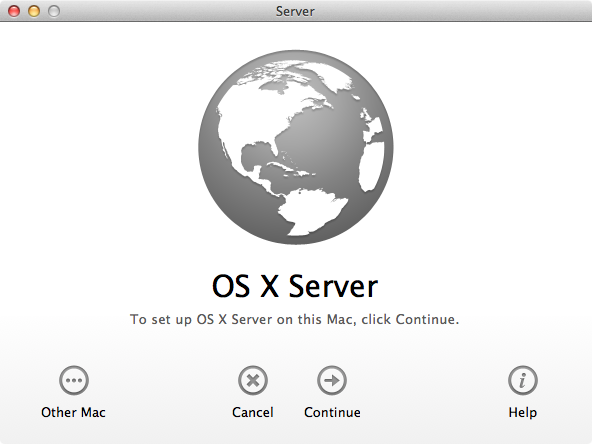
[Apple OSX Server Screenshot, courtesy ARS Technica]
A review of MacOSX Server for Mavericks.
http://arstechnica.com/apple/2013/12/a-power-users-guide-to-os-x-server-mavericks-edition/
Despite a version number increase from 2.X to 3.X, OS X Server is finished with the major overhauls. The software has been changed from an enterprise-targeted package to one better suited to power users and small businesses. Now that the transition is complete, it's clear that slow, steady improvement is the new normal.


Tuesday, December 10, 2013

Development Methodologies: Testing Code

[A Real Man]
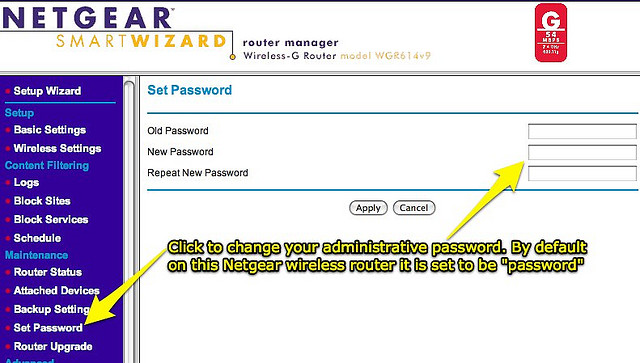
The Reality of Network Management: Every Vendor, Model, and Firmware Combination normally means slightly different interface characteristics from the Network Management Cluster. Most of the time, every combination is not available in a lab. Testing such combinations in production happens to be true, more often than not.