|
| [Sun Microsystems Logo] |
|
|
|
|
|
|
|
The First SPARC Workstation... and the Future
Abstract:
When former Sun Microsystems employees gather for reunions, stories formerly only known to a small group of original inventors will often become known. One such story was the creation of the first SPARC based desktop workstation. This story was referenced in an
IEEE publication from 2014.
/cdn.vox-cdn.com/uploads/chorus_image/image/49525835/parc_signage.0.jpg) |
| [Sign outside Xerox Palo Alto Research Center] |
The Workstation and Xerox Parc
Xerox had a research center in Palo Alto California, which was decades ahead of its time. Xerox, a corporation built around document processing, conceptualized the modern computer, and inspired an industry.
A tale of inspiration
Sun co-founder and chief hardware designer Andy Bechtolsheim recalls
spending a lot of time at Xerox Parc as an unpaid consultant during his
graduate student days. These days, the position might have been
considered an internship, but in those more informal times, Bechtolsheim
recalls, it was more like an invitation to hang around, and he did so
as much as possible, mostly testing chip design tools in development. At
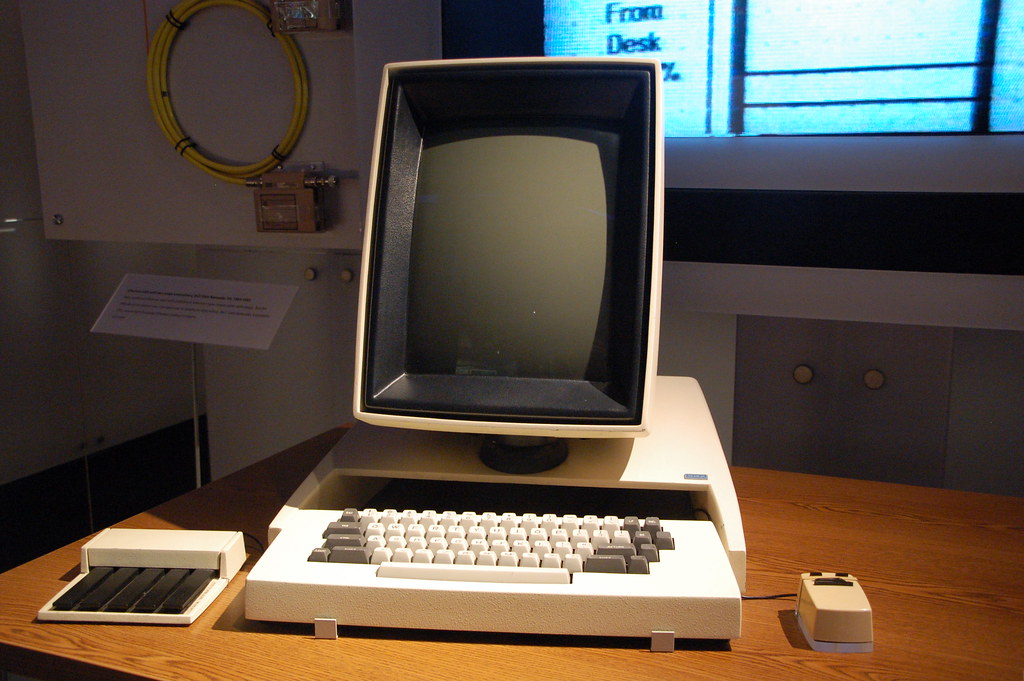
the time, Parc researchers did their jobs using Parc technology—like
the Alto computer, with its bitmapped display and Ethernet connectivity.
“That’s where the idea of building a personal workstation for engineers
and scientists originated," said Bechtolsheim. "It was obvious even as a
grad student that the world needed such a product, particularly for
engineers who wanted to do chip design or board design.”
The First Workstations
He wanted one
for himself, but Xerox wasn’t turning it into a product for engineers.
So he built it himself using mostly off-the-shelf parts. That attempt
turned into the Sun workstation.
Sun co-founder Vinod Khosla reported that when he met Bechtolsheim and
expressed interest in the technology, Bechtolsheim offered it to him at
his standard licensing fee—US $10 000. Khosla said he told Bechtolsheim
“I want you, not your technology. I don’t want the golden egg, I want
the goose.”
For its first official week of existence in 1982, Sun Microsystems was
"Sun Workstation." That was until the founders figured out that nobody
knew what a workstation was.
The very first Sun workstations delivered to a major customer in May
1982 didn’t run Unix; instead, they were used as IBM 360 terminal
emulators.
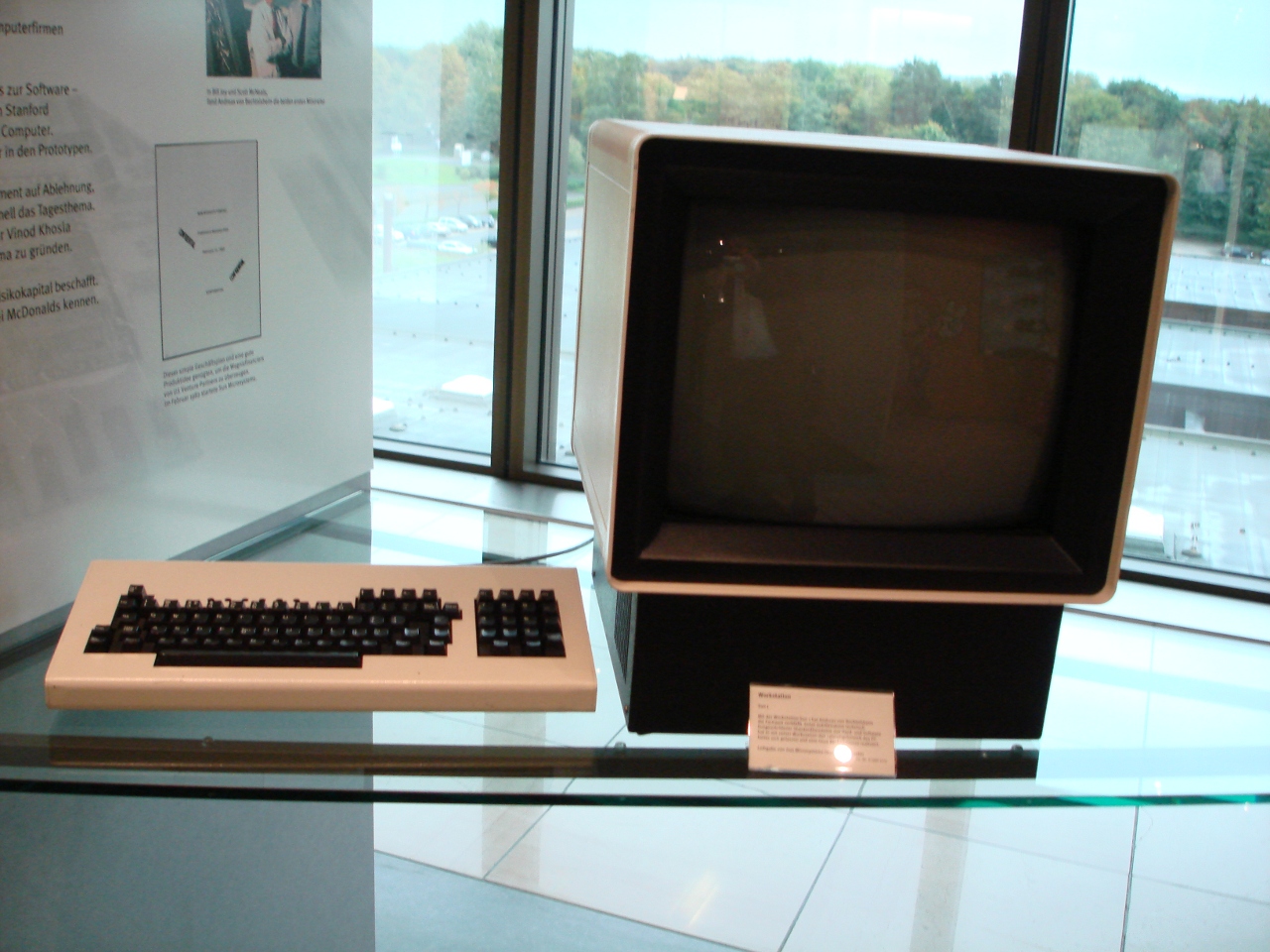 |
| [Sun 100 desktop workstation spotted at Heinz Nixdorf Museums Forum in Paderborn, Germany] |
Sun-1 Motorola 68000 Workstations
The very first workstations did not include graphics, but included an embedded UNIX Operating System. The
Sun 1 "workstation was based on the
Stanford University SUN workstation designed by
Andy Bechtolsheim (advised by
Vaughan Pratt and
Forrest Baskett), a graduate student and co-founder of Sun Microsystems."
 |
| [Sun 2/50 diskless workstation] |
Sun-2 Motorola 68010 Workstations
 |
| [A Sun 3/60 workstation with disk and tape] |
Sun-3 Motorola 68020 & 68030 Workstations
 |
| [SPARC Logo, courtesy SPARC International] |
SPARC Workstations Considered
The development project that created a workstation based on the SPARC processor
only happened because Bechtolsheim went rogue. Bechtolsheim tells the
story: “The company was building Motorola-processor based workstations,
and Motorola wasn’t keeping up CPU development. Meanwhile, Bill Joy
convinced the company that we should use the SPARC chip. By ‘86 Sun was
shipping its first SPARC server. By ‘87, there was a discussion—should
we put this into a workstation. But the VP of engineering thought this
was lunatic, too much risk. Sun at that point was a public company. As a
public company, people get instantaneously conservative and make
decisions the way Digital Equipment Corp. would make a decision, which
wasn’t quick.
But Bechtolsheim thought the risk was worth it, in part because he
was worried about what Steve Jobs was doing with his then-new company,
Next. “I knew what was going on at Next, because I had a friend who
worked there, and I grew concerned that they were building a better
product. They were using the [Motorola] 68000
[microprocessor], so I wanted to have a product with a faster CPU,
because in terms of cost/performance there’s nothing better than a
faster chip."
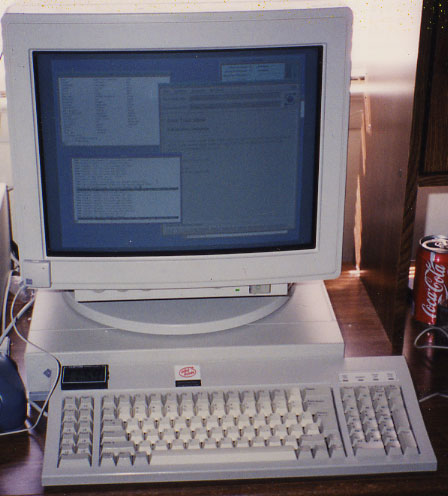 |
| [SPARCStation 1+] |
The First SPARC Workstation
So Bechtolsheim informally split from Sun in 1987, starting a
separate corporation called Unisun. The moniker was intended to give the
impression that the new business was going to go after the university
market, and not Sun's regular business customers, but, said
Bechtolsheim, it was always intended to be a general purpose
workstation.
Khosla, who by then had left Sun to join venture capital
firm Kleiner Perkins Caufield & Byers, funded the venture. "We
agreed to fund Andy to essentially rip-off Sun technology,” Khosla
recalls. “We told the board we were going to do this whether they liked
it or not, but they could buy back at cost," that is, purchase the
company and its intellectual property for the amount of Kleiner's
investment.
“Three or six months after we got going Sun decided it should
indeed be a Sun product line, and it came out in 1989; it was Sun’s best
selling workstation.”
Epilogue
The irony of history is sometimes hard to get past. One can sometimes
have the most advanced hardware and software solutions, but not know how
to market it for economic advantage... thus was the case for Xerox.
Wrapping off-the-shelf products with a clean software design with built
in Ethernet Interfaces resulted in the creation of an entirely new class
of computing systems and ultimately The Internet. With the advent of The Internet, The Market transitioned from Workstations to Servers... ironically, often by stacking Sun Workstation "pizza boxes" on a shelf in a rack, connecting their embedded Ethernet cards. Sun used to say "The Network Is The Computer", and they were right.
 |
| [Oracle Logo, Courtesy Oracle Corporation] |
SPARC Today
Today, the highest performing general purpose microprocessor on the
market continues to be SPARC. Oracle, a software company, now owns a proverbial "Golden Egg", with Fujitsu being the other. June 2016 marked the time when Oracle
resumed shipping commodity competitive systems based upon the
SPARC S7. September 2017, Oracle cut
SPARC "Core" Team employees. SPARC
firmware continues to roll out, providing the most secure microprocessor platform on the market.
SPARC Tomorrow
Also in September 2017, once again released the fastest processor on the market - the
SPARC M8. As
2020 approaches, the market looks forward to what will most likely be
the fastest processor on the market, the
SPARC M8+. With SPARC stunning performance, the market debates where the proverbial "Goose" still lives.