Monday, September 30, 2013

Third Annual Solaris Family Reunion (Part 2)


Abstract:
Deirdre at Joyent helped to organize The Third Annual Solaris Family Reunion sponsored by Joyent on September 23, 2013.Attendees ranged from former employees at Sun to current employees at Oracle. Each discoursed a short 10 minute presentation as to what they have been doing over the past 3 years. This includes sessions 7 through 11.


Session 7: History at Kevin Zimmerman
Worked at University California at Berkeley.
Deployment of workstations, servers, and system administration teams.
Federated Naming, Storage on Suns, instructional mission on Suns.
Costs of implementing Windows NT was extremely high.
Exchange, Active Directory implementing. Unlimited licensing.
Core ran under Solaris, Linux became more popular.
Oracle was slow to form policy, OpenSolaris was 1/10th the cost of NetApp, Oracle could not provide good support, CIFS code was removed from Solaris 10, Nexenta became central storage partner.
By 2004, undergraduates with mid-range systems was evaporating: web based tools & social networking tools were popular.
Presentations no longer made to university by Oracle, but only to State of California.
Famous quote, "Sun opened computing landscape."
Innovations included: NFS, DTrace, Zones, true client-server, integrated naming, integrated large scale deployment, ZFS, modifications to the network stack..
Since Oracle consumed Sun, there is a much larger community or smaller independent companies.


Session 8: Sunay Tripathi at Pluribus Network
Crossbow and FireEngine
Left on the merger day of Oracle and Sun.
Trying to build server switches on Linux. The calls taken during Beta were just to keep it alive
Famous quote, "Solaris...a rock solid piece of code, it needed to stay alive" and "we started with Linux,  and getting that damn thing to stay alive on a switch, was ***, I mean the cause of the cause... just to keep the damn thing alive."
After moving to OpenSolaris, the OS now just stays alive, the issues are somewhere else.


Session 9: Keith Wesolowski who moved from Sun, to Riverbed, to Joyent
Feb 17 2011, 1 year after change and control, Oracle ejected Keith.
Worked at Riverbed, spent 6 months on WhiteWater product
All Linux and all C++ environment.
Spend first few weeks learning the ropes, when "I realized I don't have the tooling" and the platform "had a lot of performance problems."
Started porting Riverbed software to OpenSolaris to figure out problems with the Riverbed software, but unfortunately, the problems did not exist under OpenSolaris. Could not get Linux SystemTap to even work, except to panic the box, and that did not even create a crash dump under GNU Linux.
The RAID subsystem was unsafe, with the RAID 5 write hole. Customers sent systems back with rampant data corruption.
Famous quote, "after 2 days of basically accomplishing absolutely *** nothing... I sent the suicide note to Brendan saying, man is there anybody hiring someone for something that does not suck?"
Now integrating where hardware and software meet.
(not mentioned: Riverbed and Joyent partnership)


Session 10: Max Bruning now at Joyent
Trained staff all over the world in Sun.
Started porting Linux KVM to SmartOS, Bryan and Robert continued the effort.
Provides training: DTrace, MDB, NodeJS, ZFS Internals.


Session 11: Robert Mustacchi from Sun to Joyent.
Worked on the Fishworks and KT Processor.
Completed the work at Joyent with the Linux KVM Port to SmartOS.
Works all over the stack, enhanced MDB, random hardware work, DTrace enhancements, working networking for virtual machines, and revamped libumem (enhanced small repetitive allocations & frees in the same thread.)

Monday, July 22, 2013

SunRay: End of Life Coming...


[Oracle SunRay 3plus]
Abstract:
Desktop Clients have moved from dumb terminals, to slightly intelligent systems with built in BASIC into a ROM, to desktop personal computers, to highly functional desktop UNIX workstations, to stateless appliances. The SunRay was Sun Microsystems' vision into the stateless appliance on the TCP/IP Internet. Oracle has announced the end-of-life of their hardware appliances.

[Sun Microsytsems SunRay 270]
History:
Oracle had acquired a significant set of virtualized infrastructure with their purchase of Sun Microsystems. There was Tarantella, purchased by Sun, and now mainstream within Oracle as "Oracle Secure Global Desktop". There was VirtualBox, purchased by Sun, and now mainstream within Oracle. There was Zones, constructed on Solaris, and finding their way into Oracle Enterprise Linux. There was LDom's, constructed on OpenFirmware, and gone mainstream under the Oracle T processors as Oracle VM for SPARC.

[Sun Microsystems SunRay 2]
Virtualization Blog:

Not all went well. There was Sun's Xen based Hypervisor (on top of OpenSolaris with ZFS), killed & replaced by Oracle's home-grown inferior Linux hypervisor (which lacks ZFS.) In the latest announcement from Oracle's Virtualization Blog:
In an effort to more tightly align Oracle's future desktop virtualization portfolio investments with Oracle Corporation's overall core business strategy, we have ended new feature development for Oracle Sun Ray Software (SRS), Oracle Virtual Desktop Infrastructure Software (VDI), Oracle Virtual Desktop Client (OVDC) Software, and Oracle Sun Ray Client hardware (3, 3i, and 3 Plus).

The SunRay, an amazing stateless appliance, is finding it's days coming to an end.
Network Management:
Many SunRay's are still functional after 10 years, but in new devices may not find their way into production under Oracle's flag. The question is: will the source code be opened and will others from the Illumos community decide to carry the torch for desktop appliances which have a near-forever hardware life expectancy with no moving parts?

Wednesday, July 17, 2013

North America: Wireless Network Carrier Update

Abstract:

Huge and significant changes are occurring in the Telecommunications and Wireless space during the month of July! Significant change in plans for consumers and consolidation of smaller-tier carriers may offer more competitive choice for consumers... but with advancements comes security risks.

On the Mobile User front...


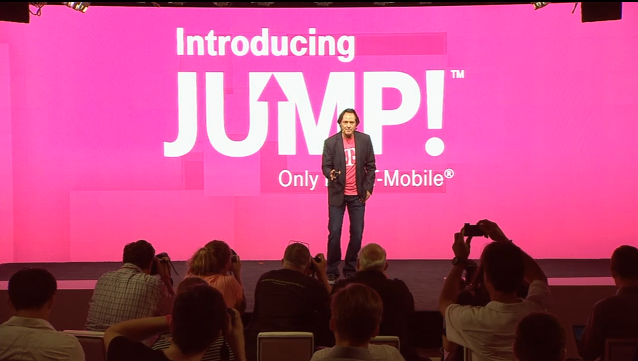
2013-07-10: T-Mobile’s new "Jump" service plan gives customers two upgrades per year
At a press conference in New York City Wednesday, T-Mobile unveiled a new type of mobile service plan that will allow customers to upgrade their phones up to twice a year with no outright financial penalty or waiting period. On the “Jump” plan, customers will still pay to switch phones, but they can get them at new-contract prices. Customers on T-Mobile will have to pay an extra $10 per month for the Jump plan.

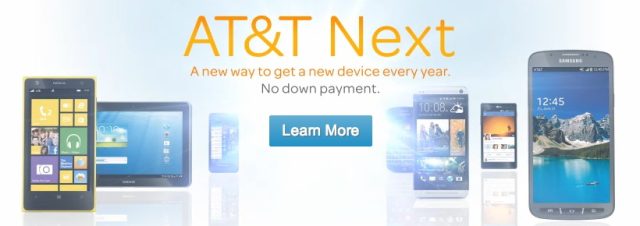
2013-07-16: AT&T jumps on the frequent-phone-upgrade bandwagon with “AT&T Next”
Not to be outdone by T-Mobile's "Jump" program and Verizon's rumored "Edge" program, AT&T on Tuesday announced a plan called "AT&T Next" that will allow its customers to upgrade their smartphones and tablets more frequently without having to pay the full, unsubsidized price for the devices. AT&T Next gives customers the option to get a new phone or tablet with no down payment in exchange for an extra charge, equivalent to about five percent of the device's unsubsidized price, on their monthly bill.

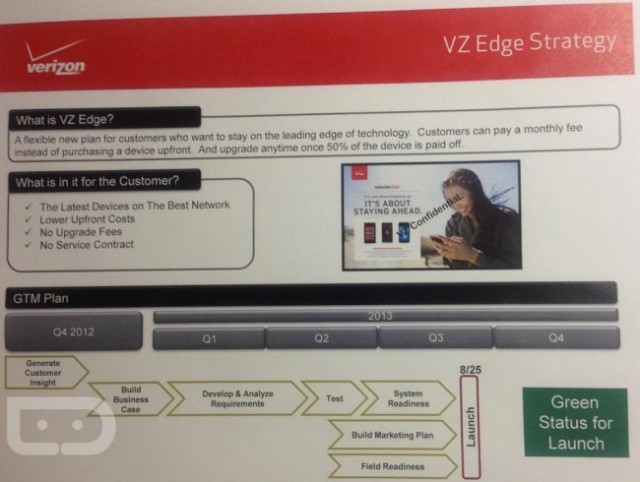
2013-07-15: Verizon’s rumored "Edge" plan may ensure you always have a new phone in your hands
It looks like the days of waiting two years for your next handset upgrade might be over. DroidLife is reporting that Verizon may be introducing its own “buy a new phone if you’re sick of your old one” plan later next month. According to the site’s source, the plan is called VZ Edge, and it will enable customers to upgrade their phones more often than once every two years to help them “stay on the leading edge of technology.”

On the Carrier front...


[AT&T storefront, courtesy Business Insider]
2013-07-12: In move for spectrum and prepaid customers, AT&T buys Leap for $1.1 billion
As a way to solidify its spectrum holdings and gain a stronger foothold in the growing prepaid mobile market, AT&T has agreed to acquire Leap Wireless (and its prepaid Cricket brand) for $15 per share, which works out to $1.1 billion, given 79.05 million in outstanding shares. Considering that Leap’s closing stock price on Friday afternoon was $7.98 per share, that’s a hefty premium. ... As of April 15, 2013, Leap had $2.8 billion of net debt. Leap shareholders will also receive a contingent right entitling them to the net proceeds received on the sale of Leap’s 700 MHz ‘A Block’ spectrum in Chicago, which Leap purchased for $204 million in August 2012.”


2013-07-05: FCC clears way for SoftBank to buy Sprint, Sprint to buy Clearwire
The U.S. Federal Communications Commission on Friday announced the removal of the last barrier to a three-company merger that will see Japan's SoftBank take control of Sprint Wireless, which itself is set to take over Clearwire.

2013-07-10: SoftBank priority is beefing up Sprint, not exec changes

SoftBank Corp (9984.T) will move rapidly to use airwaves from Clearwire Corp CLWR.O to bolster Sprint Nextel Corp's (S.N) wireless service, but it does not plan any big personnel changes once it takes over the No. 3 U.S. mobile carrier, a top SoftBank executive told Reuters.
2013-07-11: Sprint wants to become the mobile autobahn, removes all limits for life

Sprint has thrown down its own gauntlet in attracting...(e.g., contract) customers: guaranteed unlimited voice, text, and data, forever. In a press release Thursday, Sprint said that this deal would apply to both new and existing customers who sign up for Sprint’s new Unlimited, My Way, or My All-In plans. The deal will be available starting Friday, July 12, 2013 for just $80 per month.

On the Hardware front...


[image courtesy article on femtocells from gigaom.com]
2013-07-13: Femtocell flaw leaves Verizon subscribers' Wi-Fi and mobile wide open
Security researchers have demonstrated a flaw in femtocells that allows them to be used for eavesdropping on cellphone, email, and internet traffic. The hack was demonstrated on Verizon hardware, and the telco giant has issued an update to patch the vulnerability, but up to 30 other network carriers use systems with software that can be hacked in the same way. Femtocells are used to boost Wi-Fi and mobile signals within a household, but a common form of software that many devices use has a major security flaw that allows all traffic to be recorded and analyzed.