Thursday, June 20, 2013

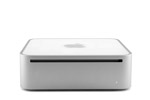
Resources for Mac Mini: Macmini2,1 2007

Abstract:
Sometimes in the computer industry, one just wants a pleasure machine to work, when one works on systems all day long. The Apple Macintoch is a fine platform which just normally works, but when it breaks, there can be interesting problems. This article walks through a short scenario common to some users.

The Problem:
When someone has an older family of systems, often hard drives will be moved from one machine to another, as systems are upgraded. The original system was moved to an external hard drive and carried from system to system, until eventually finding it's way upon this Mac Mini 2 GHz Intel 2 Core Duo. The external hard drive crashed, so a new external hard drive was formatted up,  A new version of iMovie and iPhoto were needed, but we could not download them from the Apple Store, because a new version of the MacOSX was needed (10.7.5 minimum.) This platform had MacOSX 10.6.8, so this means a new OS needed to be installed, but no longer appeared to be available on the Apple App Store. The new OS required a minimum of 2 GB, when this platform only had 1 GB. The platform would need to be opened, but opening up the older generation Intel Mac Mini is not quite that simple.
Opening an Intel based Mac Mini
The first phase in the adventure is opening the Mac Mini. The 2006 Macmini1,1 and 2007 Macmini2,1 both offer similar opening instructions. It takes some care, so watch the video included above.


Memory Requirements
It should be noted, the memory required  is one or two 200-pin PC2-5300 DDR2 (667 MHz) SO-DIMM cards. While lower configurations are possible, Apple supports dual 512MB cards (Mac OSX 10.6.8 compatible), dual 1 GB chips (Mac OSX 10.7.5 compatible), and dual 2 GB chips are possible (but only a little over 3GB is available, due to a chipset limitation on these models, but this configuration is not officially supported.) When two identical chips are used, the system will operate at it's peak performance.

Mac OSX 10.6.8 to 10.7.5
The OS this machine came to me with was Max OSX 10.6.8. While this was a fine OS for the time, apparently I should have purchased iPhoto upgrade when I had the chance. It was too late to download OSX 10.7 from the Apple App Store, but when you call Customer Support, you can purchase it on-line and upgrade over the internet!


Conclusion:
Perhaps one should have just asked to purchase an older version of iPhoto? This will be the last OS upgrade done on this Mac Mini, because Apple will no longer support a newer OS version on it. It may also be a good time to upgrade to an internal SSD. The platform will continue to be a reasonable platform for phone sync'ing, photo storage, and movie editing for some time, however, so this final upgrade may be very worth my while since it works so well on a 1080p television and existing Bluetooth Keyboard and Trackpad.


Sunday, June 16, 2013

Updated Tab: OpenSXCE

Network Management updated the OpenSXCE Tab - New Release Information!

[OpenSXCE  by Martin Bochnig]
OpenSXCE

OpenSXCE 2013.05 is an enterprise-class OpenSolaris-based server and desktop-oriented Install and Live DVD distribution. OpenSXCE runs primarily on Intel CPU-compatible and Sun UltraSPARC sun4u/sun4v-compatible 32-bit & 64-bit computers. Both GNOME and IceWM are provided with major applications like Firefox 21.0, Thunderbird 17.0.6, GIMP 2.6.7, OpenOffice 3.4.1, Pidgin 2.6.5, Songbird, Ekiga, Oracle Solaris Studio 12.x professional C/C++ compiler, and selected GNOME-based desktop applications. Use Wine 1.4.1 for installing Windows-based applications like PhotoShop, Illustrator, Dreamweaver, Libreoffice, or even your favorite video game. OpenSXCE is indirectly based upon portions of Illumos.
2013.05 and Newer Releases, Based Upon DilOS

[http] Main Web Site with  Downloads
[http] Official OpenSXCE Blog
[http] 2013.01 Live SPARC DVD
[http] 2013.05 Live x86 DVD
[http] Twitter for latest comments
[http] Maintainer - Martin Bochnig

New Tab: DilOS!

Network Management has introduced a new Source Code Repository and Distribution Tab: DilOS

DilOS is focused to be a development environment for illumos and userland builds. It supports build env with DPKG and IPKG zones. It specifically targets Intel platforms, but additional distributions are being hosted for other processors like SPARC.
  • DilOS can be a base platform for new distros - to create new APT repo's with DEB packages and ISO's.
  • DilOS can be installed to a Virtual machine (such as: VMware, VBox, etc) or bare metal with text console and SSH access.
  • DilOS contain: dilos-userland + dilos-illumos-gate + converted binaries to DEB packages from OpenIndiana (oi-experimental).
[http] Introduction to DilOS
[http] Frequently Asked Questions
[http] Documentation
[http] Download

Tuesday, June 11, 2013

Solaris ZFS: Still King for 2013

 
Abstract:
Filesystems have been the core of OS's for decades, with patches being slung upon patches. Sun released and open sourced ZFS under Solaris 10 with 128 bit computing in mind, with their projection from the life expectancy of UFS, to be good for many decades to come. ZFS has been forked and used under multiple OS distributions while alternate vendors have been cooperating to create a better file system (BTRFS) for years, in order to compete feature-for-feature.
 
 
ZFS:
Jeff Bonwick, who spent approximately 20 years at Sun Microsystems, worked with a team of developers to create ZFS, sometimes known as Zetabyte File System, but now known just as ZFS. Dozens upon dozens of OS's have standardized upon some release of ZFS since development started in 2001, with the ZFS source code being worked by Oracle, and also separately by other OS's and OpenSolaris distributions for both SPARC, Intel, and AMD platforms.


A little History:
ZFS has been around a long time, underpinning one of the most stable operating systems underpinning the Internet.
OpenSXCE on DilOS continues the OpenIndiana tradition that OpenSolaris began from Sun Solaris, offering a way forward with ZFS under SPARC, Intel, and AMD platforms.
 
BTRFS:
This effort started with the intention of bringing a ZFS-like file system to Linux. Why go through this effort with all the ZFS porting work happening? This is a good question. With over a decade of work into ZFS, it seems crazy to re-create the wheel now that Oracle owns both efforts, but there was an announcement. In May 2013, BTRFS might arrive at the end of 2013 or early 2014 for distributions. Apparently, this was the promise for the past 3 years.
 
 
Network Management Implications:
ZFS is the way of the future, with the rest of the world trying to catch up. Perhaps by this time in 2014, there will be a competitive filesystem. A network management platform would find itself in a very secure place, running on world-class OS hosted by ZFS. Such a world-class ZFS operating system distribution is not hard to find. Solaris 10 is available under SPARC and Intel. Solaris 11 is available under SPARC and Intel. If Oracle licensing does not suit business requirements, binary distributions such as OpenSXCE are looking promising for SPARC, Intel, and AMD platforms with Solaris 10 compatibility. If compatibility is not a requirement, there are dozens of other ZFS related platforms available.

Monday, June 3, 2013

Solaris, Verizon FiOS, and The Internet


Solaris and Home Users
An interesting article hit the wires. A couple of Solaris ZFS platforms in someone's home with 24TB of data storage each is apparently the culprit of sucking a lot of bandwidth. It is interesting how Solaris continues to be a motivating factor on The Internet after all these years. Verizon is not very happy with the massive data consumption of their FiOS Internet connected network.

[houkouonchi's data usage in May 2013]
 How Much is Unlimited?
Houkauonchi in California apparently pays residential rates of $208/month for 2 lines. Verizon started offering a faster residential option, which he took, even though the old business option previously had did not experience a discount or an incremental faster upgrade. What would any reasonable home user do? Well, he switched from a fast business rate to a faster resential rate to get more bandwidth! LOL! Verizon wants him to move to move back to a $400/month business service.

Once the telephone company sees an outlier like this in their usage, they start asking questions. Sometimes, it can be spammers or illegal pirating / file sharing activity.The primary driver for bandwidth usage for this user is securing hosting a server used by friends & family on the internet. As soon as this was done, Terms of Service is violated, and he needs to move to Business subscription.

[Brak710 data usage in May 2013]
Not isolated:
Another user, Brak710 from Pittsburgh, PA,
received the same type of inquiry. Apparently, he is purchasing4 different FiOS network connections, all from neighboring properties. High bandwidth usage also drove his basement servers to Business rates.
Lessons Learned:
If you have equipment at home, keep in mind that Network Carriers are monitoring their networks. Regular abusive usage patterns may cause your montly rate to rise, if once wants to keep their residential access pricing!

Tuesday, May 28, 2013

Wireless Network Carrier Updates: Clearwire, Sprint, DISH, and SoftBank


[Sprint storefront photo, courtesy Reuters]
SoftBank, Dish, Sprint, Clearwire

Abstract:In the area of network, there are 3 major modes of communication: satellite, tower, and wired infrastructure. The first two require finite shared resources referred to as spectrum. The final requires expensive infrastructure to be dug into the ground or strung along poles. In order for companies to compete effectively in a nation's network, infrstructure must be built or acquired. The process of acquiring or merging of assets with smaller network players is always going on, but this latest battle has been somewhat interesting.

[Disk logo, courtesy The Verge]
Background:
Clearwire, an early 4G U.S. network provider, is in talks to be acquired by two different domestic companies: Sprint (wireless provider) and Dish Networks (satellite provider.) Foreign SoftBank is interested in buying Sprint, at the same time, adding tremendous uncertainty to the mix.

[Charles W. Ergen, Dish Network’s chairman, courtesy NYTimes]
The Time Line: In October 2012, Japanese SoftBank tried to acquire the third largest U.S. network provider: Sprint. In December 2012, Sprint bought for itself a little Christmas present - Clearwire: a 4G network service provider. In January 2013, Dish made an unsolicited bid to purchase Clearwire, even though Sprint was in process of buying it. In March 2013, foreign SoftBank tries to aleviate security concerns in the U.S. by indicating Chinese equipment maker Huawei will be ejected from the network. In April 2013, domestic Dish offers to purchase Sprint to build a combined satellite and tower based wireless infrastructure. In May 2013, SoftBank agrees to U.S. government veto power over board of director appointments. Also in May 2013, Sprint increases their bid for Clearwire, to get their wireless spectrum.


[Sprint and Clearwire logos, courtesy Engaget]
What They Want & Need:
SoftBank owns about 1/3rd of Chinese electronic commerce company Alibabba, and wants a foothold in the U.S. market but has regulatory issues to overcome. (SoftBank uses primarily Chinese equipment.) Sprint needs to upgrade to 4G networking and find additional sources of revenue. Clear has wireless spectrum, but their gamble on early 4G WiMAX has not turned out to be the standard once hoped for, and needs to upgrade it's 4G network. Intel Corporation used to be a WiMAX advocate, Clearwire uses Huawei equipment. SoftBank uses the same cell phone wireless spectrum that Clearwire owns, making the purchase of Sprint (who is purchasing Clearwire) a very good investment - one phone, one infrastructure, multiple nations. Intel, a SoftBank partner, is pushing for SoftBank's acquisition of Sprint (and Clearwire) - possibly because of new promised equipment sales. Dish needs to expand it's market from Satellite television, provide content through wireless towers to cell phones, and add voice to their television service.
Ironies of Irony:
A foreign owned communication company wants to buy its way in the U.S. telecommunications market and pledges not to expel foreign equipment. A domestic owned communications company wants to expand it's U.S. telecommunications market but will not pledge to expel foreign equipment. Which is more secure, from a U.S. governmental perspective? Japanese SoftBank appears to be bending-over-backwards to make their acquisition happen.

Thursday, May 16, 2013

Virtualizing Solaris


Abstract:
The movement from physical to virtual servers has been happening for decades. First, the use of Physical Domains under SPARC "big-iron" became possible when Sun purchased Cray SPARC assets in 1996 while SGI purchased the remaining. The Sun Enterprise 10000 was introduced in 1997 with Physical Domains. With the release of Solaris 10 almost a decade ago, physical systems could be moved to logical Zones under a single kernel in 2004. With the line of T processors, the ability to load multiple OS's on the same platform at the firmware layer became possible in 2006. This article discusses LDom's.

P2V:
Physical to Virtual Migration or P2V is possible to consolidate physical Solaris platforms onto various virtualized Solaris platform destinations - such as Zones, Branded Zones, or LDom's. The P2V process uses an archive called a FLAR.

P2V and Branded Zone:
An Oracle Enterprise Manager blog was published recently, explaining how to move a physical server to a Branded Zone. The May 15th blog was titled: "How to go Physical to Virtual with Oracle Solaris Zones using Enterprise Manager Ops Center."

Logical Domains:
The documentation describing the deployment of the Logical Domains for Oracle Enterprise Manager is available under Oracle's web site. Each Logical Domain, sits on top of the firmware of T-Class processors, and can host Solaris 11, Solaris 10, and Solaris 10 can host older Solaris 8 & 9 Operating System under Branded Zones.

Network Management Implications:
Network Management platforms can very easily be consolidated onto newer platforms, with very little effort, using free drag-and-drop tools such as Oracle Enterprise Manager. If a network management center is still running under multiple older Physical platforms, one should consider Zones or LDom's, which offer virtually no overhead (in comparison to systems such as VMWare or HyperV which require a foreign software layer between their domains and the hardware, introducing problematic latency under heavy loads.)